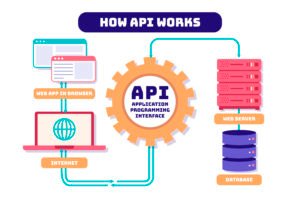
Modern applications are driven by APIs. Whether building microservices, SaaS platforms, enterprise data pipelines, or mobile backends, API reliability, security, and performance now define product success.
As release cycles become faster and CI/CD adoption grows, API testing is no longer something teams should do late in development. Organizations are moving toward shift-left testing and DevSecOps, where API quality, validation, and security are built in early and continuously.
In this guide, we compare the leading API test automation platforms—their capabilities, strengths, and limitations—and explain why shift-left platforms like Total Shift Left are becoming essential in modern software delivery.
Key Evaluation Criteria
Before selecting a tool, organizations should evaluate platforms based on these core dimensions:
Protocol support (REST, SOAP, GraphQL, gRPC, messaging)
Automation model (code-based, GUI, low-code, no-code, BDD, DSL)
CI/CD integration and DevOps readiness, API test automation with CI/CD.
Functional, integration, contract, performance, and security testing capabilities
Maintainability and scalability of test suites
Test data management and reusability
Cost model and licensing
Collaboration, governance, and reporting capabilities
The importance of each criterion varies depending on organizational size, regulatory requirements, and team composition.
Platform-by-Platform Comparison
In the landscape of API test automation, several tools stand out. Postman is known for its user-friendly interface and strong community support, making it suitable for teams starting with API testing. SoapUI and ReadyAPI offer robust features for legacy systems, while Katalon Studio provides an all-in-one solution for various testing needs. REST Assured is favored by developers for its flexibility, while Karate DSL combines BDD readability with powerful scripting capabilities.
To make this comparison meaningful, platforms are evaluated using:
Ease of adoption
Automation depth
Security and contract validation
CI/CD and DevSecOps compatibility
Team collaboration and scalability
Protocol support (REST, SOAP, GraphQL, gRPC, Webhooks)
Choosing the right tool depends on your team’s expertise and testing requirements. Each tool has its strengths and limitations, making it essential to align your choice with your specific needs. For more info on these tools, visit our article on the future of API testing.
1. Postman
Postman remains one of the most widely used platforms for building, documenting, and testing APIs. It supports REST, SOAP, and GraphQL and provides strong collaboration features.
Pros:
Fast onboarding, excellent UI, mock servers, documentation support.
Cons:
Maintaining large, automated regression suites can become complex.
Best For:
Manual and early-stage automated API validation.
Website: https://www.postman.com
2. SoapUI and ReadyAPI
SoapUI is a long-standing enterprise API testing tool with advanced support for legacy SOAP services and complex testing scenarios.
Pros:
Scalable, supports security, data-driven testing, and deep protocol coverage.
Cons:
Learning curve and licensing costs (ReadyAPI).
3. Katalon Studio
Katalon offers a unified platform for UI, API, and mobile automation built for QA teams and test engineers.
Pros:
Low-code, built-in data-driven testing, dashboards, CI/CD ready.
Cons:
Advanced features require paid license.
Website: https://katalon.com
4. REST Assured
A lightweight Java-based framework for REST API testing embedded directly into development workflows.
Pros:
Flexible, version-controlled, great for CI/CD and engineering teams.
Cons:
Requires programming skills; no GUI.
Website: https://rest-assured.io
5. Karate DSL
Karate combines BDD readability with powerful runtime execution, making it ideal for teams who want both simplicity and control.
Pros:
Readable syntax, parallel execution, supports REST, GraphQL, WebSocket, performance testing.
Cons:
Smaller ecosystem than Postman or REST Assured.
Website: https://karatelabs.io
6. Total Shift Left API Platform
Total Shift Left API represents this class of intelligent tooling. It integrates with CI/CD pipelines, automatically validates API specifications, detects defects before code is released, and aligns development, QA, and security teams around a shared definition of correctness.
Strengths:
Automated contract validation and schema enforcement
Continuous API security analysis and compliance checks
No-code authoring and fast test generation from API specifications
Earlier detection of design-level and security flaws
Alignment with DevSecOps and governance frameworks
Limitations:
Requires disciplined API-first culture and consistent adoption of API design standards
May introduce perceived upfront overhead for teams used to late-stage testing
Best Fit:
Organizations are embracing secure-by-design development, regulatory compliance, microservices architectures, rapid release cycles, and developer-driven pipelines. Learn more: https://totalshiftleft.ai
Final Thoughts
Despite the advantages of API test automation, teams often face challenges. One common issue is the complexity of integrating automation tools into existing workflows. Many organizations struggle with scaling their automated tests, especially when dealing with microservices and diverse API protocols. Additionally, teams may encounter difficulties in maintaining test scripts as applications evolve. To address these challenges, it’s crucial to adopt a shift-left testing approach, integrating testing earlier in the development process. This can significantly reduce the time and cost associated with fixing defects later. For strategies on overcoming these challenges, read our guide on why manual API testing fails at scale.