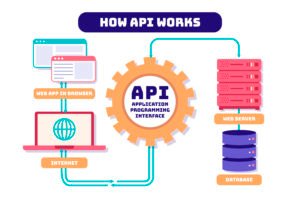
In today’s digital ecosystem, products aren’t built—they’re assembled. Every application is now a mesh of microservices, APIs, integrations, third-party connectors, and cloud components. That means a single broken API can break the entire customer experience.
Traditionally, teams tested APIs after development or as part of late-cycle integration testing. But by then, defects are expensive, timelines are locked, and developers are already deep into the next sprint.
That’s exactly why the world is shifting left.

What Is Shift-Left API Testing?
shift-left testing framework simply means testing early, testing often, and testing continuously—starting right from design and development stages, not after the code is shipped.
Instead of waiting for UI, environments, or dependencies, teams validate the backbone of their application—the APIs—at the earliest possible stage.
It’s not just a process shift. It’s a mindset shift.
Why Shift-Left Matters More Than Ever
1. APIs Are Now the Core of Every Digital Experience
Whether it’s banking, healthcare, retail, logistics, or SaaS—APIs drive the entire flow of data.
Testing them early reduces the risk of customer-facing failures and protects business continuity.
2. Early Defect Detection Saves Time, Budget & Reputation
Studies consistently show that fixing an API defect in production costs 10–100x more than fixing it in development.
Shift-Left reduces rework, delays, and firefighting.
3. Faster Releases, Confident Teams
Continuous API validation removes dependency on UI or integrated environments.
Teams ship faster because they get instant feedback on every code change.
4. Builds a Culture of Engineering Excellence
Shift-Left forces teams to think about quality at the design stage, resulting in scalable, secure, and stable systems.
This elevates engineering culture—quality becomes proactive, not reactive.
5. Enables True CI/CD & DevOps
Modern pipelines rely on automated API tests to act as gates.
Shift-Left ensures every commit is validated by lightweight, fast, and reliable tests—making DevOps genuinely continuous.
What Does a Strong Shift-Left API Testing Strategy Look Like?
Contract Testing from Day 1
Automated CRUD + Scenario Tests
Mocking & Virtualization for Unavailable Services
AI-assisted test generation for faster coverage
Environment-aware validation (dev → test → UAT → staging)
Unified dashboards and insights for engineering + business
Versioning + backward compatibility checks
Security testing integrated early (OWASP API Top 10)
This reduces dependency bottlenecks and creates a predictable, scalable quality foundation.
The Future: AI-Powered Shift-Left API Testing
With teams building more APIs than ever, manual test creation isn’t scalable.
AI-driven tools (like your Shift-Left API platform) can:
Auto-generate tests from API endpoints
Understand schema, payloads & relationships
Create edge-case scenarios
Provide environment-level behavioral insights
Reduce effort from weeks → minutes
This is where Shift-Left becomes Shift-Lift—lifting engineering velocity without compromising stability.
Conclusion: Shift-Left API Testing Isn’t Optional Anymore
If your product depends on APIs, your success depends on how early and how effectively you test them.
shift-left testing framework’t just a competitive advantage—it is becoming the minimum expected standard.
Companies that embrace it will ship faster, break less, scale confidently, and deliver experiences customers trust.
Final Thoughts
Despite the advantages of API test automation, teams often face challenges. One common issue is the complexity of integrating automation tools into existing workflows. Many organizations struggle with scaling their automated API tests, especially when dealing with microservices and diverse API protocols. Additionally, teams may encounter difficulties in maintaining test scripts as applications evolve. To address these challenges, it’s crucial to adopt a shift-left testing framework approach, integrating testing earlier in the development process. This can significantly reduce the time and cost associated with fixing defects later. For strategies on overcoming these challenges, read our guide on why manual API testing fails at scale.
To maximize the effectiveness of API test automation, teams should follow best practices. Start by defining clear testing objectives and selecting the right tools based on your specific needs. Implementing a robust CI/CD pipeline can streamline the testing process, allowing for continuous feedback and faster releases. Additionally, consider using version control for your test scripts to facilitate collaboration among team members. Regularly review and update your test cases to ensure they remain relevant as your application evolves. For more advanced strategies, check out our article on startups can save more money.