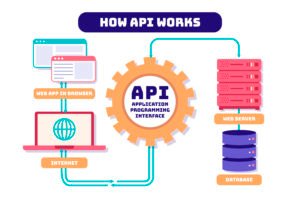
In today’s digital ecosystem, products aren’t built—they’re assembled. Every application is now a mesh of microservices, APIs, integrations, third-party connectors, and cloud components. That means a single broken API can break the entire customer experience.
Traditionally, teams tested APIs after development or as part of late-cycle integration testing. But by then, defects are expensive, timelines are locked, and developers are already deep into the next sprint.
That’s exactly why the world is shifting left.
What Is Shift-Left API Testing?
Shift-Left API Testing simply means testing early, testing often, and testing continuously—starting right from design and development stages, not after the code is shipped.
Instead of waiting for UI, environments, or dependencies, teams validate the backbone of their application—the APIs—at the earliest possible stage.
It’s not just a process shift. It’s a mindset shift.
Why Shift-Left Matters More Than Ever
1. APIs Are Now the Core of Every Digital Experience
Whether it’s banking, healthcare, retail, logistics, or SaaS—APIs drive the entire flow of data.
Testing them early reduces the risk of customer-facing failures and protects business continuity.
2. Early Defect Detection Saves Time, Budget & Reputation
Studies consistently show that fixing an API defect in production costs 10–100x more than fixing it in development. Shift-Left reduces rework, delays, and firefighting.
3. Faster Releases, Confident Teams
Continuous API validation removes dependency on UI or integrated environments.
Teams ship faster because they get instant feedback on every code change.
4. Builds a Culture of Engineering Excellence
Shift-Left forces teams to think about quality at the design stage, resulting in scalable, secure, and stable systems.
This elevates engineering culture—quality becomes proactive, not reactive.
5. Enables True CI/CD & DevOps
Modern pipelines rely on automated API tests to act as gates.
Shift-Left ensures every commit is validated by lightweight, fast, and reliable tests—making DevOps genuinely continuous.
What Does a Strong Shift-Left API Testing Strategy Look Like?
A high-performing shift-left API testing strategy embeds quality from the earliest stages of development and ensures fast, predictable delivery. A mature approach typically includes:
Contract Testing from Day 1
Ensuring teams define and validate API expectations early, enabling parallel development and reducing integration defects.Automated CRUD and End-to-End Scenario Tests
Building a reliable automation suite that covers core operations and business workflows, providing immediate feedback as code changes.Service Mocking and Virtualization
Simulating unavailable or unstable downstream services so development and testing can proceed without dependency delays.AI-Assisted Test Generation
Accelerating coverage by using AI to identify gaps, propose edge-case scenarios, and generate test scripts quickly.Environment-Aware Validation Across the Pipeline
Applying contextual rules and configurations as APIs move from development to test, UAT, and staging environments.Unified Dashboards and Insights for Engineering and Business Stakeholders
Offering real-time visibility into API health, coverage, failures, performance trends, and release readiness.API Versioning and Backward-Compatibility Checks
Ensuring new versions do not break existing consumers and enabling safe, controlled evolution of services.Early Integration of Security Testing (OWASP API Top 10)
Shifting vulnerability scanning, validation, and threat modeling earlier to prevent costly security issues downstream.
The Future: AI-Powered Shift-Left API Testing
With teams building more APIs than ever, manual test creation isn’t scalable.
AI-driven tools (like your Shift-Left API platform) can:
Auto-generate tests from API endpoints
Understand schema, payloads & relationships
Create edge-case scenarios
Provide environment-level behavioral insights
Reduce effort from weeks → minutes
This is where Shift-Left becomes Shift-Lift—lifting engineering velocity without compromising stability.
Final Thoughts: Shift-Left API Testing Isn’t Optional Anymore
If your product depends on APIs, your success depends on how early and how effectively you test them.
Shift-Left Testing Framework: Build Quality from Day Zero’t just a competitive advantage—it is becoming the minimum expected standard.
Companies that embrace it will ship faster, break less, scale confidently, and deliver experiences customers trust.