
API Testing for Microservices Platforms: Challenges, Patterns & Best Practices (2026)
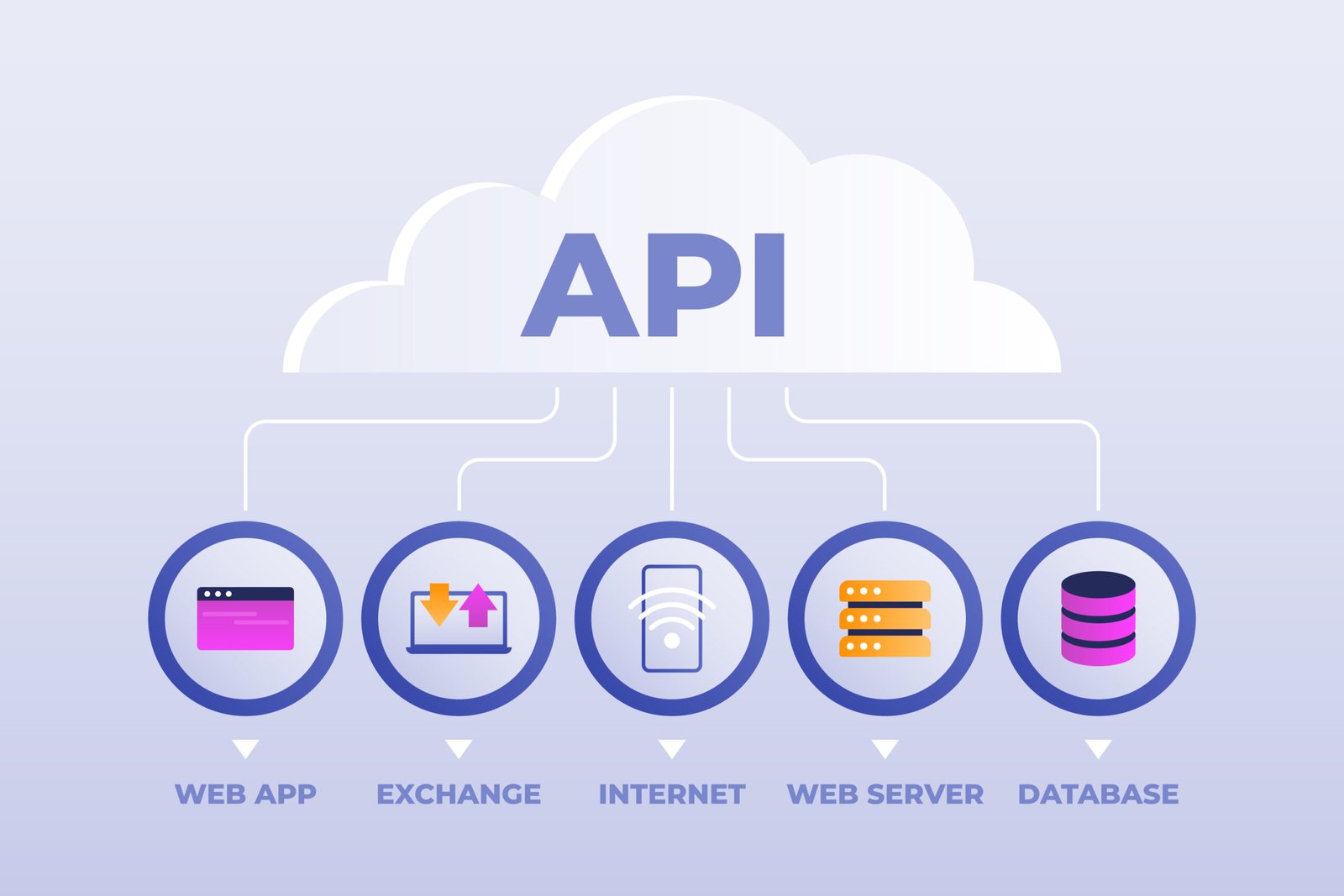
**API testing for microservices platforms** is the discipline of validating the HTTP, gRPC, and asynchronous contracts that hold a distributed system together — on every commit, across every service boundary, with enough observability and automation that hundreds of independently deployed services can ship safely without a central QA bottleneck. It replaces brittle end-to-end UI suites with a layered strategy: consumer-driven contract tests, component tests with service virtualization, mesh-aware integration tests, and production-grade synthetic monitoring.
The stakes have never been higher. The Cloud Native Computing Foundation's 2025 survey found that 84% of production organizations now run microservices, with the median platform operating 74 services and the top quartile over 300. The World Quality Report 2025 attributes over 70% of production incidents in microservices platforms to API contract mismatches or integration failures, and DORA's State of DevOps research shows elite performers deploy 973x more frequently than low performers — a cadence only achievable when API testing happens inside the pull request, not after.
Table of Contents
- Introduction
- What Is API Testing for Microservices Platforms?
- Why This Matters Now for Engineering Teams
- Key Components of a Microservices API Testing Strategy
- Reference Architecture
- Tools and Platforms
- Real-World Example
- Common Challenges
- Best Practices
- Implementation Checklist
- FAQ
- Conclusion
Introduction
Microservices architectures are the default for modern platforms. The promise is independent deployments, team autonomy, and horizontal scalability. The reality is that every service boundary is a testable contract, every schema change is a potential outage, and every asynchronous message is an integration test waiting to fail.
Traditional QA breaks down here. You cannot write enough end-to-end tests to cover the combinatorial explosion of interactions, cannot staff a QA team large enough to manually validate 300 APIs on every release, and cannot rely on production monitoring alone — by the time an alert fires, consumers are already failing.
This guide lays out what works in 2026: contract-first testing, mesh-aware integration, event-driven validation, and shift-left automation that catches defects before merge. For context, see the rising importance of shift-left API testing and shift-left AI-first API testing platform. New to APIs? Start with the API Learning Center and what is an API.
What Is API Testing for Microservices Platforms?
API testing for microservices is the practice of validating the contracts between independently deployed services that together form a business platform. Those contracts take several forms: synchronous REST (typically described in OpenAPI 3.x), gRPC/Protobuf, GraphQL schemas, and asynchronous message schemas (AsyncAPI, Avro, JSON Schema over Kafka or similar brokers).
It differs from monolith testing in three structural ways. First, there is no single end-to-end path — a single user request may traverse ten services, each owned by a different team on a different release cadence. Second, the boundaries are the product — a REST endpoint or Kafka topic is a contract with downstream consumers the producer may never meet. Third, the test pyramid inverts — heavy E2E UI tests are replaced with a broad base of contract and component tests, thin integration slices, and observability-driven production validation.
A mature strategy treats each service as a self-contained unit with clearly defined inputs, outputs, and side effects, validates those interfaces with automated tests on every commit, and relies on distributed tracing, structured logs, and metrics to catch the emergent behaviors that no pre-production test can simulate. Cross-reference: contract testing and request/response anatomy.
Why This Matters Now for Engineering Teams
Microservice sprawl has outpaced human test capacity
A platform with 200 services, 20 endpoints each, and a modest 10-test suite per endpoint is 40,000 cases. Manual authoring at 20 minutes per test is 13,000 engineer-hours — more than six full-time engineers doing nothing else. AI-driven generation and contract-first workflows are the only paths that scale. See AI-driven API test generation.
Release cadence has compressed past traditional QA cycles
DORA's 2024 research pegs elite teams at on-demand, multi-deploy-per-day cadence. A staging QA gate that takes hours to run either blocks releases or gets skipped. Testing must run inside the pull request, in under five minutes, with deterministic pass/fail signals. See API test automation with CI/CD.
Contract drift is the leading incident driver
When a producer adds a required field or changes a response type, consumers break silently. Without consumer-driven contract tests and automated drift detection, the first signal is a production error. See API schema validation: catching drift.
Event-driven architectures add a second testable surface
Modern platforms use Kafka, RabbitMQ, Kinesis, and Pub/Sub as heavily as they use HTTP. Each topic is a contract. Async testing is a first-class concern, not an afterthought.
The cost-of-defect curve has not softened
IBM Systems Sciences Institute and NIST research show defects caught pre-merge cost 5-15x less than in QA, and 30-100x less than production. That economics scales super-linearly with service count. See the cost of late testing.
Key Components of a Microservices API Testing Strategy
Consumer-driven contract tests (CDCT)
Consumers publish the exact request shapes and response expectations they rely on; producers verify against those contracts on every commit. Pact, Spring Cloud Contract, and AI-generated contracts all implement this pattern. CDCT turns integration risk into a compile-time check. Deep dive: contract testing lesson and API contract testing solution.
Spec-driven component testing
Each service is tested in isolation against its OpenAPI, gRPC, or AsyncAPI spec, with dependencies virtualized. This produces fast, deterministic feedback and catches the majority of service-internal regressions before they hit integration. See OpenAPI test automation and generate tests from OpenAPI.
Service virtualization and mocking
Mountebank, WireMock, Hoverfly, and modern platform-native mocks stand in for unavailable or unstable dependencies. Virtual services enable deterministic pipelines, parallel team workflows, and independent deployment cycles.
Mesh-aware integration testing
On Istio, Linkerd, or Consul, tests assert on mesh policy — mTLS enforcement, retry budgets, circuit breaker behavior, timeout propagation, and trace context continuity. Traffic mirroring sends production-shaped requests to staging without affecting users.
Asynchronous and event-driven validation
AsyncAPI specs act as the schema of record for Kafka, RabbitMQ, or Pub/Sub topics. Tests validate message envelopes, payload contracts, ordering guarantees, at-least-once delivery semantics, idempotency, and dead-letter queue behavior. See validation errors.
Authentication and authorization coverage
Microservices typically rely on OAuth2 client credentials between services and JWT-based user identity propagation. Every service boundary is an auth boundary. See OAuth2 client credentials, JWT authentication, and token refresh patterns.
Observability-driven test signals
Distributed traces (OpenTelemetry), structured logs, and RED/USE metrics are test oracles in their own right. A test that verifies a trace spans the expected services and that no span exceeds its SLO is often more valuable than a response-body assertion. The analytics and monitoring feature captures this pattern at the platform level.
Ready to shift left with your API testing?
Try our no-code API test automation platform free. Generate tests from OpenAPI, run in CI/CD, and scale quality.
Production-grade synthetic monitoring
The last layer is continuous validation against production — synthetic transactions, canary analysis, and chaos-engineering-style probes that catch emergent failures no pre-merge test can simulate.
Reference Architecture
A microservices API testing architecture operates as five layers connecting source artifacts, test execution, and production feedback.
Layer 1 — Source artifacts. OpenAPI, gRPC proto files, GraphQL schemas, and AsyncAPI documents live in each service repository as first-class contracts. A linter (Spectral, buf lint) enforces quality on every commit. These artifacts feed every downstream test layer.
Layer 2 — Contract and generation. Consumer-driven contracts (Pact files, AI-generated contract suites) and spec-driven test suites are produced from the Layer 1 artifacts. A central broker (Pact Broker or equivalent) versions contracts and matches consumer expectations to producer verification runs. AI generation sits here too — producing baseline positive, negative, and boundary cases from specs.
Layer 3 — Execution. Tests run headlessly and in parallel in CI. Component tests use service virtualization; integration tests run against ephemeral environments stood up per-PR via Kubernetes namespaces, Docker Compose, or Testcontainers. Execution must be deterministic, sharded, and under five minutes for PR feedback. See test execution feature.
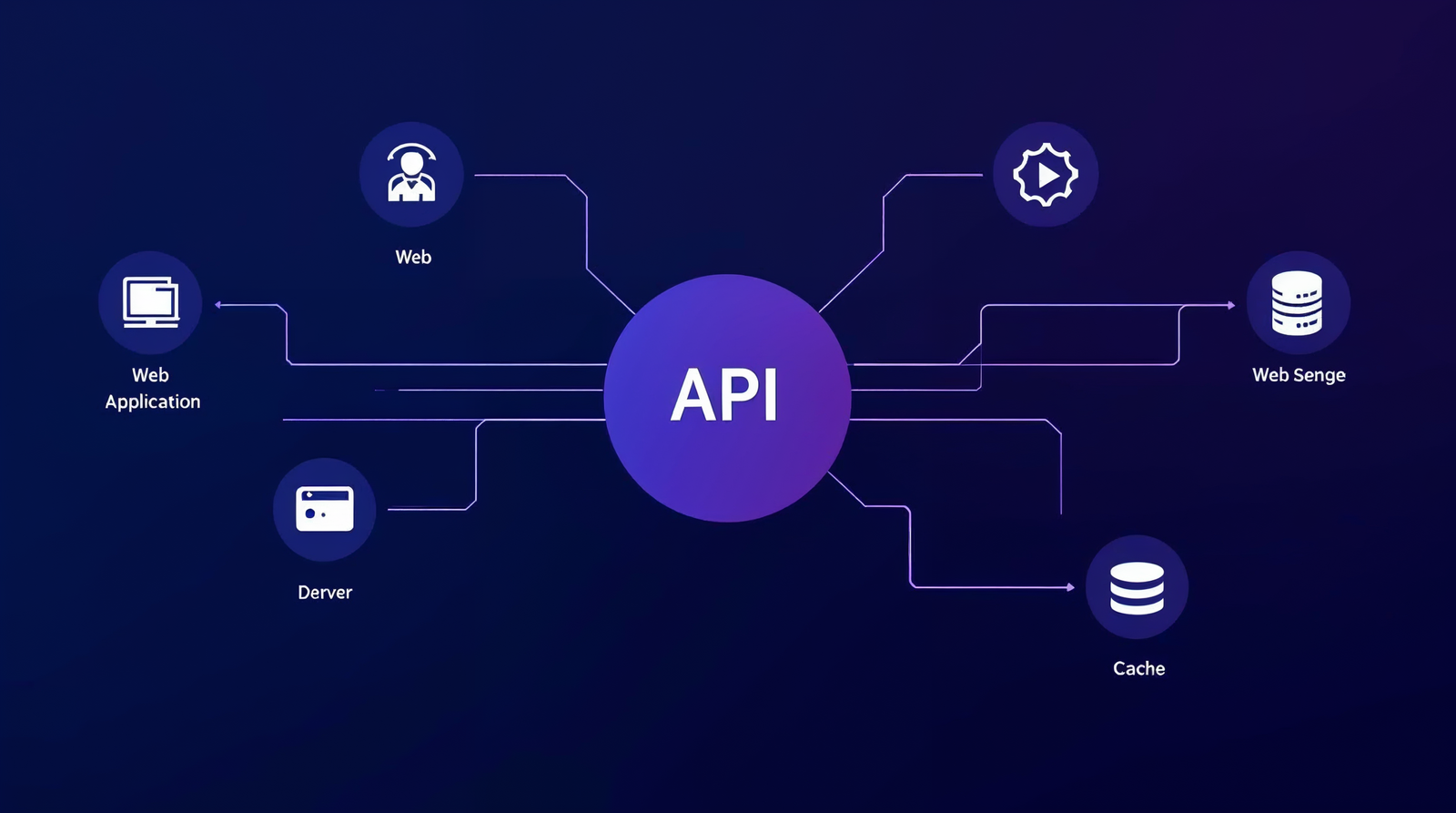
Layer 4 — Mesh and environment. On service mesh deployments, tests are mesh-aware: they traverse Istio/Linkerd sidecars, exercise retry and timeout policies, and assert on trace propagation. Traffic mirroring replays production shapes into staging for realistic coverage.
Layer 5 — Observability and production feedback. OpenTelemetry traces, Prometheus metrics, and structured logs act as test oracles. Synthetic monitors run continuously against production. Drift detected in production feeds back to Layer 1, closing the loop.
Cross-cutting all five: governance — secrets management, RBAC, audit logging, and environment isolation. The collaboration and security feature handles these platform controls.
Tools and Platforms
| Platform / Tool | Category | Best For | Key Strength |
|---|---|---|---|
| Total Shift Left | AI-First Shift-Left Platform | End-to-end microservices API test automation | Spec-to-CI generation, self-healing, mesh-aware execution |
| Pact | Consumer-Driven Contract Testing | CDCT between producer/consumer services | Language-agnostic contracts, broker-based versioning |
| Spring Cloud Contract | JVM Contract Testing | Spring Boot microservices | Native Spring integration, Groovy/YAML DSL |
| WireMock | Service Virtualization | Stubbing HTTP dependencies in component tests | Flexible matchers, record-and-replay |
| Mountebank | Multi-Protocol Virtualization | HTTP, TCP, SMTP service simulation | Protocol breadth, stateful imposters |
| Testcontainers | Ephemeral Test Environments | Real dependencies in component tests | Dockerized databases, brokers, and services |
| Postman | Collection-Based API Testing | Exploratory testing and manual debugging | Collaboration UX |
| Karate | BDD API Testing DSL | Engineering-heavy teams writing scripts | Gherkin syntax, powerful assertions |
| Schemathesis | Property-Based Spec Fuzzing | OpenAPI-driven fuzz testing | Automatic negative cases from schema |
Deeper comparisons: best API test automation tools compared, top OpenAPI testing tools compared, and the compare page. For vendor-specific views see ReadyAPI vs Shift Left, Apidog vs Shift Left, and best AI API testing tools 2026. Migrating from collections? See Postman alternatives.
The category is bifurcating. Point tools (Pact, WireMock, Testcontainers) solve discrete problems but leave the integration work to platform teams. AI-first, spec-driven platforms consolidate contract generation, execution, virtualization, and observability into a single workflow — the only approach that scales past 100 services without a dedicated tooling team.
Real-World Example
Problem: A global logistics company operated 168 microservices across 22 teams, processing 40M shipment events daily across Kafka and REST. A 9,000-test Postman suite took 4 hours in staging and caught only 35% of integration defects pre-production. Schema drift had caused 11 Sev-1 incidents in the prior year, including a 92-minute outage when a billing service failed to parse a new required field. Deploy frequency stalled at twice weekly per service.
Solution: The platform team rolled out a contract-first, shift-left strategy in four phases. Phase 1: published OpenAPI and AsyncAPI specs for all 168 services, Spectral-linted on every PR. Phase 2: adopted Pact for REST and AsyncAPI contract tests for Kafka, with a central broker. Phase 3: introduced an AI-first platform that generated positive, negative, and boundary cases from each spec and self-healed on non-breaking changes. See shift-left testing framework. Phase 4: added mesh-aware integration tests using Istio traffic mirroring and OpenTelemetry trace assertions, plus synthetic production monitoring.
Results: Pre-merge defect detection rose from 35% to 89%. Schema-drift Sev-1 incidents fell from 11 to 1 — caught within 90 seconds by synthetic monitors. Median PR test time dropped from 4 hours to 3 minutes 40 seconds. Per-service deploy frequency rose from twice weekly to 3.2x daily for the top quartile. QA capacity was redirected to exploratory, chaos, and risk-based testing. The team now operates at DORA elite performance across all four metrics.
Common Challenges
Combinatorial explosion of service interactions
With 200 services, the number of possible interaction paths exceeds any feasible test matrix. Teams that try to cover every path with end-to-end tests end up with slow, flaky suites nobody trusts. Solution: Invert the pyramid. Cover each service boundary with contract and component tests; rely on thin integration slices and production observability for cross-service behavior. Accept that not every path is testable pre-merge — and that's fine if contracts and tracing are solid. See api testing strategy for microservices.
Contract drift between producer and consumer
Producers ship a "non-breaking" change that consumers interpret differently. Weeks later, a consumer fails in production. Solution: Adopt consumer-driven contract testing with a central broker. Run producer verification on every PR, and block merges when any consumer contract fails. Treat the broker as production-critical infrastructure. See API contract testing and contract testing lesson.
Environment instability and flakiness
Shared staging environments with partial deployments and stale data produce false failures that erode trust in automation. Solution: Replace shared environments with per-PR ephemeral environments (Kubernetes namespaces, Testcontainers) and service virtualization for unavailable dependencies. Measure and publish flakiness rates; anything over 2% is a bug to fix, not a test to retry.
Async and event-driven testing gaps
Teams that master REST testing often have no coverage at all for Kafka, RabbitMQ, or event-sourcing flows. Solution: Make AsyncAPI the schema of record. Run contract tests on every topic. Assert on idempotency, ordering, at-least-once delivery, and dead-letter behavior explicitly. Use platform-level harnesses that can subscribe, produce, and assert across topics deterministically.
Free 1-page checklist
API Testing Checklist for CI/CD Pipelines
A printable 25-point checklist covering authentication, error scenarios, contract validation, performance thresholds, and more.
Download FreeAuthentication complexity across service boundaries
OAuth2 client credentials, JWT propagation, mTLS cert rotation, and nested token exchanges make auth the most common reason tests fail in CI. Solution: Centralize auth configuration in the testing platform's vault, not in CI environment variables. Automate token refresh. Test auth flows explicitly against your most complex production path, not the simplest. See OAuth2 client credentials and token refresh patterns.
CI cost and feedback latency
Thousands of tests run sequentially are prohibitively slow and expensive, and developers abandon slow pipelines. Solution: Require sharded parallel execution by default. Use smart test selection on feature branches (run only tests affected by changed files), full suite on main. Budget PR feedback at five minutes; anything longer is an outage of the development loop itself.
Best Practices
- Treat every service boundary as a product contract. Publish an OpenAPI, gRPC proto, GraphQL schema, or AsyncAPI doc for every producer, version it, lint it on every PR, and treat breaking changes as a deprecation process with notice — not a surprise.
- Invert the test pyramid for microservices. Target 60-70% contract and component tests, 20-30% integration slices, and minimal E2E. UI-heavy pyramids collapse at microservice scale; see API test coverage.
- Adopt consumer-driven contracts with a central broker. CDCT is the single highest-ROI investment in microservices testing. It turns runtime integration risk into a PR-time check.
- Generate, don't hand-author, baseline test suites. AI-first platforms produce positive, negative, and boundary cases from specs in minutes. Humans curate and add business-logic edges rather than typing baseline cases. See shift-left AI-first platform.
- Virtualize aggressively in component tests. WireMock, Mountebank, or platform-native virtualization gives deterministic, fast feedback without waiting on dependent teams or shared environments.
- Use ephemeral, per-PR environments for integration tests. Kubernetes namespaces and Testcontainers eliminate the "shared staging is broken again" class of failure.
- Make observability a first-class test oracle. Distributed traces, structured logs, and metrics detect emergent issues that no assertion can pre-specify. Instrument with OpenTelemetry and assert on trace shapes.
- Enforce spec quality as a PR check. Spectral for OpenAPI, buf lint for Protobuf, AsyncAPI linters for events. The ROI on spec-quality tooling compounds across every downstream test.
- Parallelize execution by default. Shard across runners. Ten minutes sequential becomes one minute on 10 shards. Developers tolerate one minute; they will not tolerate ten.
- Shift auth configuration into the platform. Centralize OAuth2 clients, JWT issuers, API keys, and mTLS certs. Scattered CI env vars are a perpetual source of flakes.
- Measure DORA metrics and test KPIs together. Deploy frequency, change failure rate, lead time, and MTTR move together with contract coverage, PR test time, and escape rate. Report them on one dashboard via the analytics monitoring feature.
- Run synthetic monitors continuously in production. Pre-merge testing catches pre-merge defects. Synthetic probes catch emergent failures within seconds — they are complementary, not redundant.
Implementation Checklist
- ✔ Inventory every service, its contracts (REST/gRPC/GraphQL/AsyncAPI), and its owners
- ✔ Publish OpenAPI, proto, and AsyncAPI specs for every service in its repository
- ✔ Add Spectral (and equivalents) as a required PR check on every spec
- ✔ Stand up a central contract broker (Pact Broker or equivalent)
- ✔ Pilot consumer-driven contract testing between two high-traffic services
- ✔ Generate baseline component test suites from each spec using an AI-first platform
- ✔ Configure service virtualization (WireMock, Mountebank) for unavailable dependencies
- ✔ Introduce Testcontainers or ephemeral namespaces for per-PR integration tests
- ✔ Wire every service repo into CI (GitHub Actions, GitLab, Azure DevOps, Jenkins)
- ✔ Set PR feedback SLO at five minutes; shard and parallelize to meet it
- ✔ Centralize OAuth2, JWT, API key, and mTLS configuration in the platform vault
- ✔ Instrument every service with OpenTelemetry tracing and structured logs
- ✔ Add AsyncAPI-driven contract tests for every Kafka/RabbitMQ/Pub-Sub topic
- ✔ Introduce mesh-aware integration tests for mTLS, retries, and circuit breakers
- ✔ Configure schema-drift detection against running services on every build
- ✔ Deploy synthetic monitoring for critical business flows in production
- ✔ Measure and publish flakiness; investigate anything over 2% as a defect
- ✔ Track DORA metrics alongside contract coverage and pre-merge escape rate
- ✔ Retire overlapping Postman collections on a defined deprecation timeline
FAQ
What is API testing for microservices?
API testing for microservices is the practice of validating the HTTP, gRPC, and asynchronous contracts between independently deployed services that together form a platform. Unlike testing a monolith, it emphasizes contract testing, service virtualization, event-driven validation, and observability-driven verification rather than heavy end-to-end UI tests. It treats every service boundary as a testable product interface.
How is testing microservices different from testing a monolith?
A monolith has one deployable and a small number of external boundaries, so end-to-end tests cover most integration risk. A microservices platform has dozens or hundreds of independently versioned services, polyglot stacks, asynchronous messaging, and no single owner of the end-to-end flow. Testing shifts from UI-driven E2E toward consumer-driven contract tests, component tests with service virtualization, and production observability as a quality signal.
What is consumer-driven contract testing and why does it matter?
Consumer-driven contract testing (CDCT) captures the expectations a consumer service has of a producer in a versioned contract, then verifies the producer against those contracts on every commit. It matters because it lets teams deploy independently without breaking each other, catches breaking changes at PR time, and replaces fragile integration tests with a fast, deterministic feedback loop.
How should a service mesh influence API testing strategy?
A service mesh (Istio, Linkerd, Consul) provides traffic control, mTLS, retries, timeouts, and telemetry at the network layer. Testing strategy should verify mesh policies explicitly — that mTLS is enforced, that retries do not amplify load, that circuit breakers trip at expected thresholds, and that distributed traces are emitted. Mesh-aware testing also enables traffic mirroring and canary validation using production-shaped traffic.
How do you test event-driven and asynchronous microservice APIs?
Async testing requires different patterns than request-response REST. Use AsyncAPI as the schema-of-record, validate message envelopes and payloads against it, assert on side effects with polling or subscription harnesses, and use contract tests between producers and consumers of events. Test idempotency, at-least-once delivery, ordering guarantees, and dead-letter queue behavior explicitly.
What metrics should engineering leaders track for microservices API testing?
Track five categories. (1) Coverage — percent of endpoints and event topics under contract test. (2) Feedback speed — median PR test time, target under five minutes. (3) Escape rate — defects found in staging or production per deploy. (4) Drift — schema drift events caught pre-merge versus post-merge. (5) Reliability — flakiness rate and MTTR for failing test triage. DORA metrics (deploy frequency, change failure rate, MTTR) should improve as these mature.
Conclusion
Microservices platforms scale when their testing strategy scales with them. Organizations running 300+ services with daily deploys and single-digit change-failure rates are not using 2015-era Postman collections and overnight staging runs. They run contract-first, spec-driven, AI-generated, shift-left testing inside every pull request, backed by mesh-aware integration slices and synthetic production monitoring. The gap between teams that have made this shift and teams that haven't widens every quarter.
The path forward is staged. Inventory contracts. Lint them. Stand up a broker. Pilot CDCT between two services. Generate component suites with an AI-first platform. Move testing into the pull request. Measure DORA and test KPIs together. Expand service by service. Retire the legacy suite on a defined timeline. None of these steps are heroic on their own, but the compounding effect is the difference between a platform that ships and one that firefights.
If you want to see contract-first, AI-generated, shift-left microservices API testing working end to end — OpenAPI and AsyncAPI ingested, positive and negative tests generated, mesh-aware execution inside your CI — explore the Total Shift Left platform, start a free trial, or book a demo. First green run in under 10 minutes, across every service in your platform.
Related: Shift-Left AI-First API Testing Platform | The Rising Importance of Shift-Left API Testing | API Test Automation with CI/CD | AI-Driven API Test Generation | API Schema Validation: Catching Drift | Shift-Left Testing Framework | Best API Test Automation Tools Compared | API Contract Testing | API Learning Center | Platform Overview | Free Trial | Book a Demo
Ready to shift left with your API testing?
Try our no-code API test automation platform free.