
Failed Runs Explained as Causes
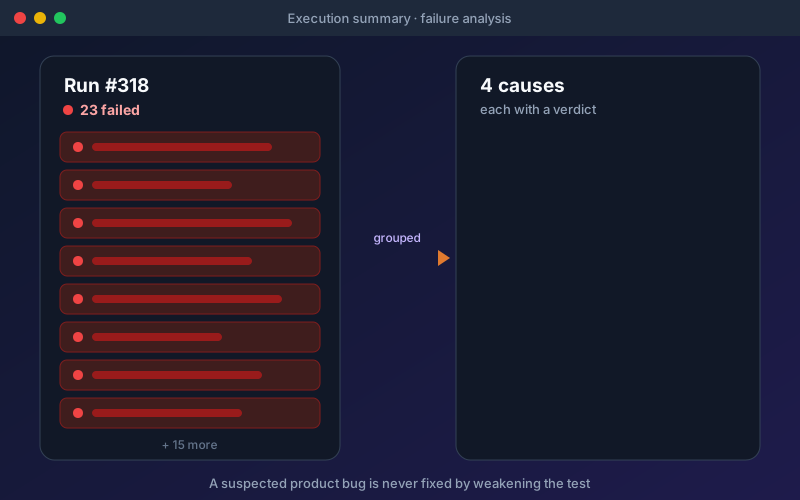
A handful of causes with verdicts, instead of a long list of red rows.
What It Does
A pack with 40 red rows usually has three or four real problems behind it. Failure analysis finds them. It clusters failing tests by cause, labels each cause with a verdict, and shows the evidence, so the team knows whether to fix tests, reseed data, repair an environment, or file a bug. You can ask for a second look at any cause and add your own hints, and the AI takes them into account. The Fix button is grounded: it reads the specification, the requirement, the intent of the test, and the analysis of the run, and every suggested change cites its evidence. Green runs are examined as well. Would this test notice a regression? Was the requirement it claims to cover actually verified? Does the response still match its documentation? Suggested improvements only ever add checks.
Overview
When a run fails, Shift-Left Studio groups the failures into a handful of causes and gives each one a verdict: test defect, data issue, environment problem, or suspected product bug. It reads what the server actually said, so a firewall or gateway page, a sign-in page, rate limiting, and a missing record are told apart from a real permission refusal instead of all reading as "access denied". Fix every test that shares a cause in one step, with guardrails: a suspected product bug is never "fixed" by changing the test, and a negative test is never weakened into one that can no longer fail. Passing runs are examined too, for what they leave unchecked.
Key Capabilities
How It Works
- 1
Run a pack as usual; the execution summary shows its counters first and the causes below
- 2
Open a cause to see its verdict, the affected tests, and the evidence
- 3
Ask for a second look and add hints when the verdict needs more context
- 4
Fix every test that shares a cause in one step, with each change citing its evidence
- 5
Review suggestions for passing tests, which only ever add missing checks
Available on
All Plans
Included in the free trial — no credit card required.
Go deeper
Guides and playbooks that show this capability in practice.
Try Failure Analysis Today
Start your 15-day free trial — no credit card required.