
How Shift Left Testing Works in CI/CD Pipelines (2026)
Quick answer
Shift-left testing in CI/CD pipelines means running unit tests on every commit, API contract tests on every pull request, and integration tests before merge to main, rather than testing only in a late-stage staging phase. Security scans run in parallel with functional tests, and quality gates block any code that fails. In one real example, a fintech cut API contract-defect detection from 10-14 days to under 4 minutes after adopting this pattern.
Reviewed by Parveen Kumari

Shift left testing in CI/CD pipelines is the practice of running automated tests at the earliest stages of software delivery — on every commit, pull request, and build. It catches defects before they compound, reduces post-release bugs, and shortens feedback cycles for faster, more reliable releases.
Engineering teams are under relentless pressure to ship faster without sacrificing quality. The traditional model—where QA teams run tests against a staging environment at the end of a sprint—simply cannot keep up. By the time a defect is discovered in that model, multiple developers have already built on top of the broken code, the context needed to fix it has faded, and the cost of remediation has multiplied.
Continuous Integration and Continuous Delivery (CI/CD) pipelines promised to solve this by automating the build and deployment process. But many teams bolted testing onto the end of the pipeline rather than weaving it throughout. The result was faster deployments of the same buggy software.
Shift left testing changes that equation fundamentally. When tests run at every stage of the pipeline—from the first line of code committed to the final deployment gate—quality becomes a continuous property of the system rather than a checkpoint at the end. For the foundational concepts behind this approach, see our complete guide to shift left testing. This guide explains exactly how to implement shift left testing in CI/CD pipelines, with concrete examples for GitHub Actions, GitLab CI, and Jenkins, and shows how platforms like Shift-Left API make API test automation a first-class citizen of any pipeline.
In this guide
- What Is Shift Left Testing in CI/CD?
- Why It Matters for Modern Engineering Teams
- Key Components of a Shift Left CI/CD Strategy
- Pipeline Architecture
- Tools for Shift Left CI/CD Testing
- Shift-left testing in CI/CD in practice: a worked example
- GitHub Actions, GitLab CI, and Jenkins Examples
- Shift-left testing in CI/CD challenges and how to solve them
- Shift-left testing in CI/CD best practices
- Shift Left CI/CD Testing Checklist
- Frequently asked questions about shift-left testing in CI/CD
What Is Shift Left Testing in CI/CD?
Shift left testing in CI/CD refers to the practice of moving all testing activities as far left (early) as possible in the software delivery pipeline. Rather than waiting until code is merged, staged, or deployed, tests execute at the moment of change—on every commit, branch, or pull request.
In a CI/CD context, "shifting left" means:
- Unit tests run on every commit, catching logic errors before code is even reviewed.
- API contract tests run on every pull request, validating that service interfaces remain stable before merging.
- Integration tests run before any merge to a protected branch, preventing incompatible changes from entering the main codebase.
- Security and compliance scans run in parallel with functional tests, ensuring vulnerabilities are caught at the same speed as feature defects.
- Quality gates block promotion of code that fails defined thresholds, preventing substandard builds from progressing downstream.
The result is a pipeline that produces continuous feedback rather than a periodic report. Developers learn about failures in minutes rather than days.
The Shift Left CI/CD Spectrum
| Pipeline Stage | Traditional Testing | Shift Left Testing |
|---|---|---|
| Code commit | No testing | Unit tests run automatically |
| Pull request opened | Manual code review only | Automated API + lint + security scan |
| Merge to main | Trigger build | Full integration test suite |
| Deploy to staging | QA begins here | Smoke tests + regression suite |
| Deploy to production | Testing done | Continuous monitoring + synthetic tests |
For the GitHub-specific detail — service containers, matrix sharding, OIDC and reusable workflows — see API testing in GitHub Actions.
Why It Matters for Modern Engineering Teams
Defects Cost Less When Found Earlier
Industry research consistently shows that defects caught during development cost 10 to 100 times less to fix than those found in production. In a CI/CD environment without shift left practices, a broken API contract discovered in staging may require reverting multiple dependent changes, re-running deployments, and coordinating across teams. The same defect caught at the pull request stage is a five-minute fix.
Faster Feedback Loops Drive Better Engineering
When developers receive test results within minutes of pushing code, they retain the mental context needed to fix problems immediately. A test failure discovered three days after the causative commit requires archaeology—reading logs, reconstructing state, and re-understanding code that no longer feels fresh. Shift left testing keeps feedback in the developer's flow.
CI/CD Without Shift Left Is Incomplete
Many organizations celebrate having CI/CD pipelines while still experiencing poor quality. The reason is often that their pipeline automates deployment but not detection. A pipeline that runs no tests—or runs them only at the final stage—delivers bugs to production faster, not slower. Shift left testing is what transforms a deployment pipeline into a quality pipeline.
Regulatory and SLA Requirements
For teams operating in regulated industries—fintech, healthcare, government—shift left testing in CI/CD provides the audit trails and continuous compliance evidence that manual testing cannot produce at scale. This aligns directly with broader DevOps testing strategy principles. Every pipeline run generates a timestamped record of what was tested, what passed, and what was blocked.
Key Components of a Shift Left CI/CD Strategy
Unit Test Layer
Unit tests are the foundation of shift left CI/CD. They run in seconds, require no external dependencies, and provide the first signal that logic is broken. Every commit should trigger the full unit test suite, and failure should block the pipeline immediately.
API Test Layer
API tests validate that services expose the correct endpoints, accept the right inputs, return the expected outputs, and handle errors properly. Because APIs are the contracts between services in a microservices architecture, broken APIs propagate failure across multiple teams. For teams managing complex service meshes, our API testing strategy for microservices covers this in depth. Running API tests on every pull request prevents contract violations from entering shared branches, and first-class CI/CD integrations make that PR-stage execution a native step rather than a bolted-on script.
Ready to shift left with your API testing?
Try our no-code API test automation platform free. Generate tests from OpenAPI, run in CI/CD, and scale quality.
Shift-Left API automates this layer entirely. Import your OpenAPI or Swagger specification, and the platform generates a comprehensive API test suite—covering happy paths, edge cases, and error conditions—without requiring any test code to be written. The generated tests run via CLI in any CI/CD environment.
Integration Test Layer
Integration tests verify that multiple services or components work correctly together. They are slower than unit or API tests and typically run on merge to protected branches rather than on every commit. In a shift left strategy, integration tests still run before any code reaches a staging environment.
Security Scanning Layer
Static application security testing (SAST), dependency vulnerability scanning, and API security testing should run in parallel with functional tests. Tools like Snyk, OWASP ZAP, and Trivy integrate directly into CI/CD pipelines and provide security signal at the same speed as quality signal.
Quality Gates
Quality gates are automated policy enforcement points in the pipeline. They define thresholds—minimum test coverage, maximum allowed vulnerabilities, required test pass rates—that code must meet before advancing to the next stage. Without quality gates, shift left testing becomes advisory rather than mandatory.
Pipeline Architecture
The following diagram illustrates a shift left CI/CD pipeline with testing integrated at every stage:
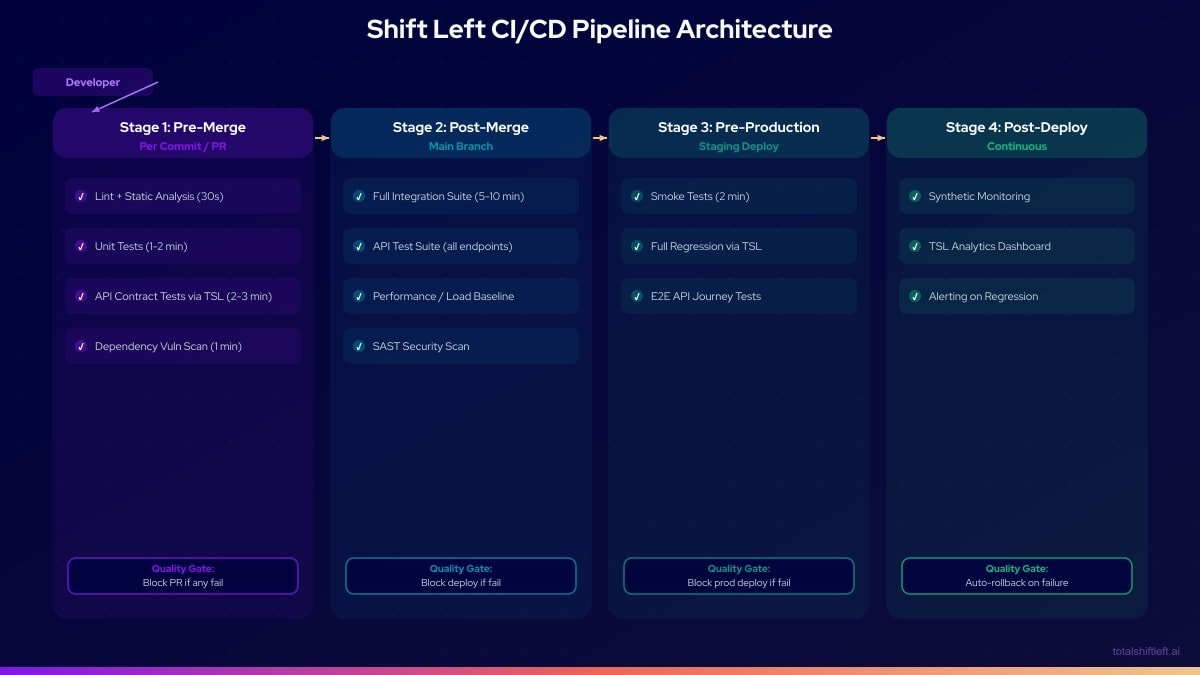
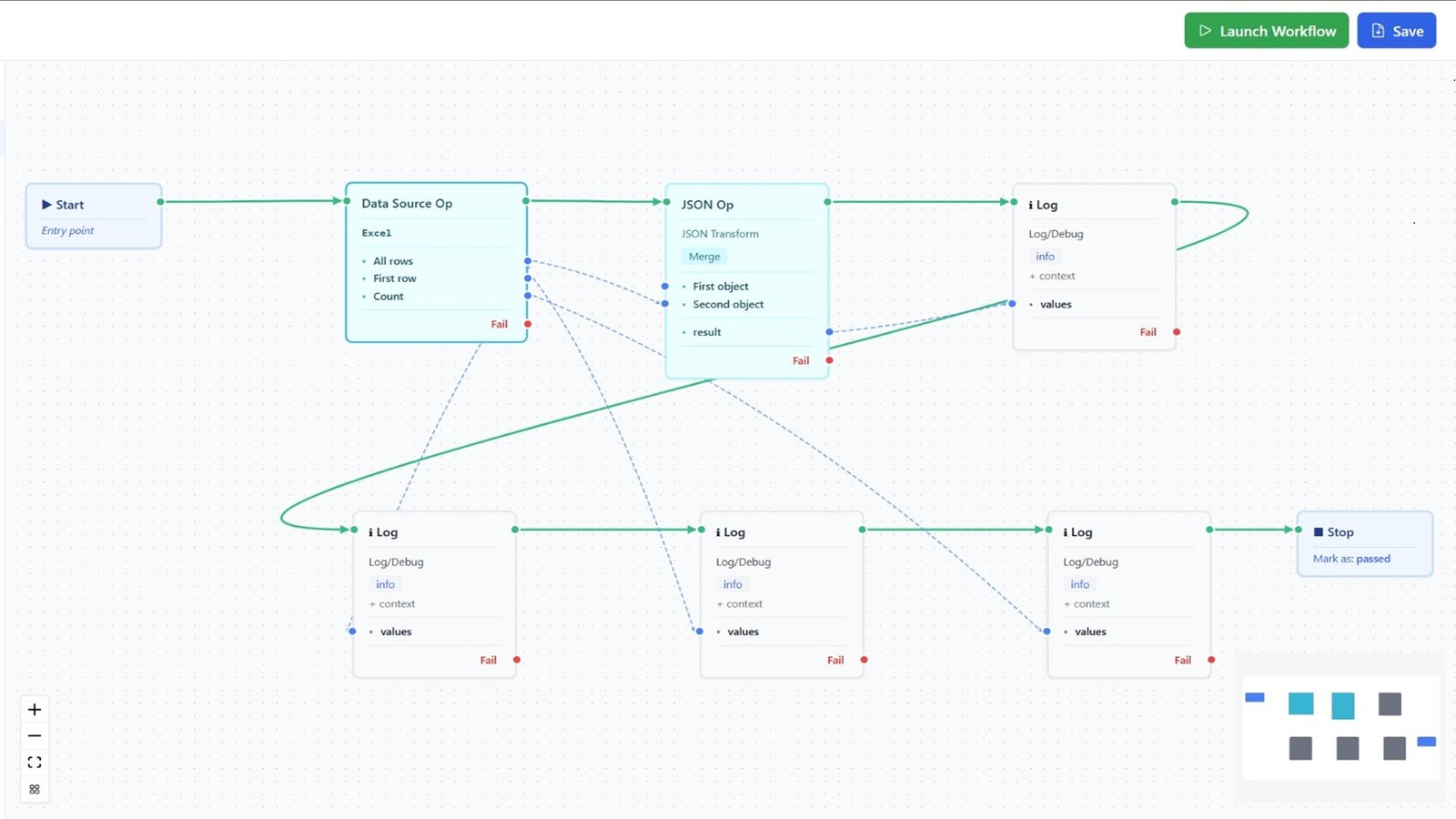
This architecture ensures that no code advances to the next stage without passing the quality and security requirements of the current stage.
Tools for Shift Left CI/CD Testing
| Category | Tools | Notes |
|---|---|---|
| CI/CD Platform | GitHub Actions, GitLab CI, Jenkins, CircleCI, Azure DevOps | Choose based on your source control and cloud provider |
| API Test Automation | Shift-Left API, Postman, REST Assured, Karate | TSL requires no coding; others require test authoring |
| Unit Testing | JUnit, pytest, Jest, NUnit | Language-dependent; should run on every commit |
| Contract Testing | Pact, Shift-Left API, Spring Cloud Contract | Validates service interface compatibility |
| Security Scanning | Snyk, OWASP ZAP, Trivy, Semgrep | Run in parallel with functional tests |
| Code Quality | SonarQube, ESLint, Checkstyle, CodeClimate | Static analysis for maintainability and bugs |
| Test Reporting | Allure, TestRail, TSL Analytics Dashboard | Aggregate results; trend analysis over time |
| Performance Testing | k6, JMeter, Gatling | Run on merge to main; not on every commit |
| Mock Servers | Shift-Left API Mocks, WireMock, Mockoon | Enable testing before dependent services exist |
Shift-left testing in CI/CD in practice: a worked example
The Problem
A fintech startup with 12 engineers was shipping new API features weekly. Their pipeline ran unit tests on commits but had no API testing stage. Integration tests ran manually by QA every two weeks in a staging environment. The result: API contract breakages were discovered 10–14 days after introduction, requiring expensive rollbacks and coordination with dependent teams.
The Solution
The team adopted Shift-Left API and integrated it into their existing GitHub Actions pipeline. The process took one afternoon:
- They uploaded their OpenAPI specification to Shift-Left API, which automatically generated 340 API tests covering all endpoints.
- They added a
tsl-testjob to their GitHub Actions workflow that runs on every pull request. - They configured quality gates to block merging if any API tests failed.
- They set up TSL mock servers so developers could test their own services against mocked dependencies without waiting for other teams.
The Results
Within the first sprint after adoption:
- API contract defects were caught at PR stage, with an average detection time of under 4 minutes.
- Zero API regressions reached staging over the following 60 days.
- Time spent in manual QA reduced by 65% because the automated pipeline caught the majority of defects.
- Developer confidence in merging increased, and deployment frequency doubled.
GitHub Actions, GitLab CI, and Jenkins Examples
GitHub Actions
The following workflow runs Shift-Left API API tests on every pull request:
name: Shift-Left API Tests

on:
  pull_request:
    branches: [main, develop]

jobs:
  api-tests:
    runs-on: ubuntu-latest
    steps:
      - name: Checkout code
        uses: actions/checkout@v4

      - name: Install Shift-Left API CLI
        run: npm install -g @totalshiftleft/cli

      - name: Run API Tests
        env:
          TSL_API_KEY: ${{ secrets.TSL_API_KEY }}
          TSL_PROJECT_ID: ${{ secrets.TSL_PROJECT_ID }}
          API_BASE_URL: ${{ secrets.STAGING_API_URL }}
        run: |
          tsl test run \
            --project $TSL_PROJECT_ID \
            --base-url $API_BASE_URL \
            --format junit \
            --output test-results.xml

      - name: Publish Test Results
        uses: dorny/test-reporter@v1
        if: always()
        with:
          name: API Test Results
          path: test-results.xml
          reporter: java-junit
GitLab CI
stages:
  - test
  - deploy

api-shift-left-tests:
  stage: test
  image: node:20
  script:
    - npm install -g @totalshiftleft/cli
    - tsl test run
        --project $TSL_PROJECT_ID
        --base-url $API_BASE_URL
        --format junit
        --output test-results.xml
  artifacts:
    reports:
      junit: test-results.xml
  rules:
    - if: $CI_PIPELINE_SOURCE == "merge_request_event"
Jenkins
pipeline {
    agent any
    stages {
        stage('Shift-Left API Tests') {
            steps {
                sh 'npm install -g @totalshiftleft/cli'
                sh """
                    tsl test run \
                      --project ${TSL_PROJECT_ID} \
                      --base-url ${API_BASE_URL} \
                      --format junit \
                      --output test-results.xml
                """
            }
            post {
                always {
                    junit 'test-results.xml'
                }
                failure {
                    error 'API tests failed. Blocking pipeline.'
                }
            }
        }
    }
}
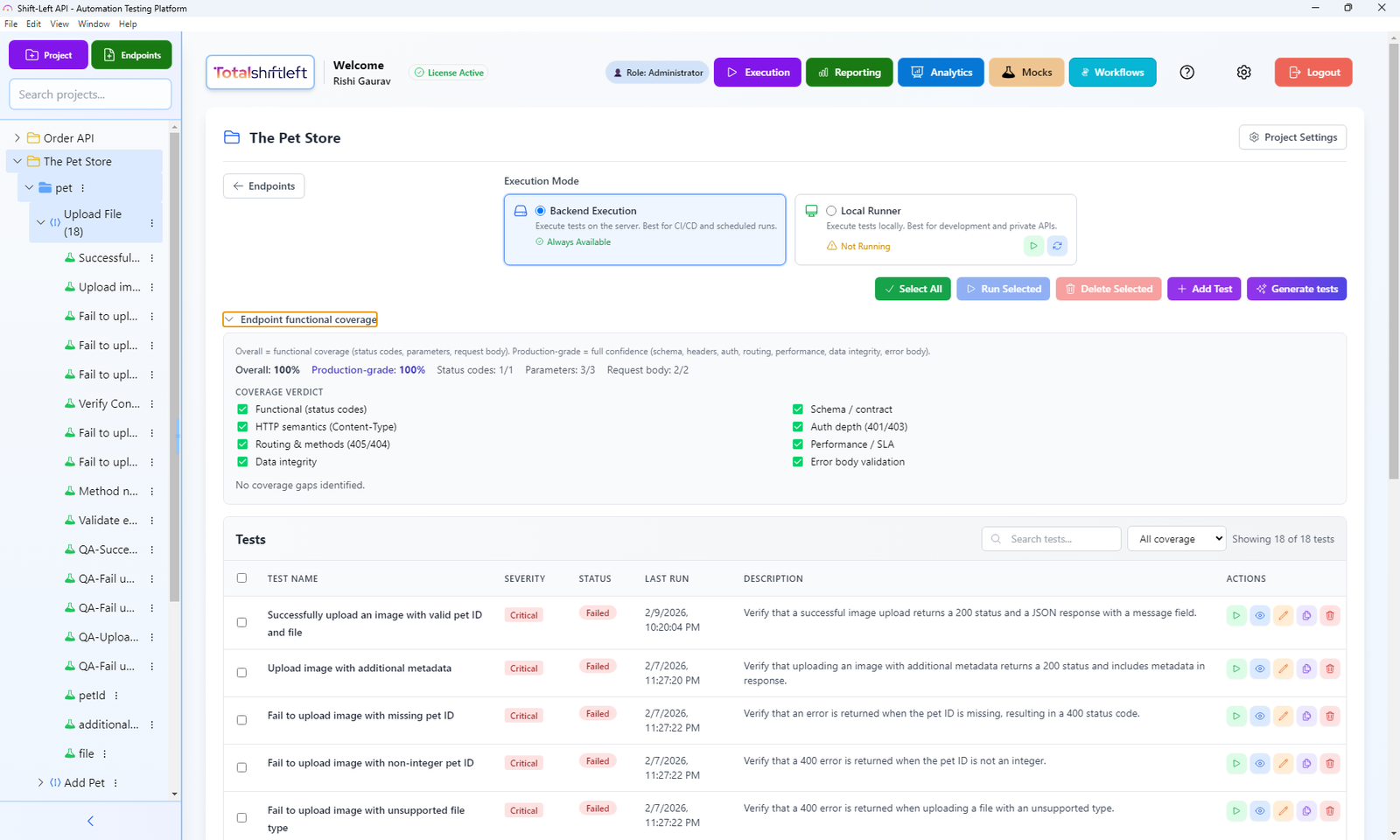
Each of these examples follows the same pattern: install the CLI, run tests against your API base URL, publish results, and fail the pipeline on test failure. No custom test code is required—Shift-Left API generates and maintains the tests from your OpenAPI specification.
Free YAML templates + guide
CI/CD Testing Pipeline Templates
Production-ready CI/CD pipeline templates for GitHub Actions and GitLab CI. Includes API testing, contract testing, and performance testing stages.
Download FreeShift-left testing in CI/CD challenges and how to solve them
Challenge 1: Slow Tests Block Developer Productivity
Problem: Test suites that take 20+ minutes to run cause developers to work around them, disabling gates or bypassing checks.
Solution: Segment tests by speed. Unit tests run in under 2 minutes on every commit. API tests run in 3–5 minutes on every PR. Full integration suites run only on merges to protected branches. Use parallel execution to keep each stage fast.
Challenge 2: Flaky Tests Erode Trust
Problem: Tests that sometimes pass and sometimes fail without code changes cause teams to ignore failures, defeating the purpose of the pipeline.
Solution: Invest in test stability before expanding coverage. Use retry logic for network-dependent tests. Isolate tests with mocks for external dependencies. Track flakiness metrics and fix flaky tests as high-priority defects.
Challenge 3: API Tests Require Test Code Maintenance
Problem: Traditional API testing tools require engineers to write and maintain hundreds of test scripts. As APIs evolve, keeping tests current is a full-time job.
Solution: Use specification-driven testing. Shift-Left API generates tests from your OpenAPI spec and updates them automatically when the spec changes. This eliminates the maintenance burden and ensures tests always reflect the current API contract.
Challenge 4: No Testing in Early Development
Problem: APIs don't exist yet when development starts, so testing seems impossible at the earliest stages.
Solution: Use mock servers. Shift-Left API creates mock servers from your OpenAPI spec, enabling frontend teams and dependent services to test against a realistic API before the backend is built. This is shift left in its purest form—testing the contract before the implementation exists.
Challenge 5: Results Are Buried in Pipeline Logs
Problem: Test results scattered across pipeline logs are difficult to analyze, trend, and act on.
Solution: Publish structured results (JUnit XML, JSON) and aggregate them in a test reporting platform. Shift-Left API includes a built-in analytics dashboard that trends API test results over time, identifies patterns in failures, and correlates regressions with specific commits.
Shift-left testing in CI/CD best practices
- Implement a comprehensive shift left testing strategy before configuring pipeline stages. Strategy defines which tests run where; pipeline configuration implements it.
- Run tests on every pull request, not just on merge. Catching failures before code review prevents reviewers from wasting time on broken code.
- Define quality gates with explicit thresholds. "All tests must pass" is the minimum; also enforce coverage minimums and performance baselines.
- Use parallel test execution. Run independent test suites simultaneously to minimize pipeline duration.
- Keep the pipeline fast. If any stage takes more than 10 minutes, developers will find ways to skip it. Optimize aggressively.
- Treat test failures as build failures. Never allow pipeline progression on test failure, regardless of urgency or deadline pressure.
- Select tools purpose-built for CI/CD integration. The best shift left testing tools provide native pipeline integrations and fast execution times.
- Use mocks for external dependencies. Tests that rely on live third-party APIs are slow, flaky, and often unavailable in CI environments. Mock them.
- Version your test configurations. Store test configuration in your repository alongside your code so changes are reviewed and tracked.
- Monitor test trends over time. A test suite that passes consistently for months and then begins flaking is a signal of architectural drift or environmental instability.
- Integrate security testing at the same speed as functional testing. Security defects discovered in production are far more costly than those caught in the pipeline.
- Start small and expand. Begin with the highest-risk API endpoints and expand coverage incrementally rather than attempting 100% coverage immediately.
Shift Left CI/CD Testing Checklist
- ✔ CI/CD pipeline triggers tests on every pull request and commit
- ✔ Unit tests run in under 2 minutes on every push
- ✔ API tests run automatically on every pull request (no manual trigger)
- ✔ Quality gates block PR merge on test failure
- ✔ Integration tests run on every merge to main/master
- ✔ Security scans run in parallel with functional tests
- ✔ Test results are published in a structured, reviewable format
- ✔ Mock servers are available for all external API dependencies
- ✔ Pipeline duration per stage is monitored and kept below 10 minutes
- ✔ Flaky tests are tracked and treated as high-priority defects
- ✔ Test coverage trends are monitored over time
- ✔ API tests are generated from OpenAPI/Swagger spec (no hand-coding)
- ✔ Quality gate thresholds are documented and version-controlled
- ✔ Developers receive test feedback within 5 minutes of committing code
- ✔ Post-deployment synthetic monitoring is active for all critical API paths
See also: contract testing in our learn hub for the underlying concept.
Frequently asked questions about shift-left testing in CI/CD
What is shift left testing in CI/CD?
Shift left testing in CI/CD means running tests as early and as often as possible in the pipeline—starting from the first code commit rather than waiting until deployment. This catches bugs when they are cheapest to fix and keeps feedback in the developer's immediate workflow.
How does shift left testing integrate with GitHub Actions?
With GitHub Actions, you define test jobs that trigger on pull requests and commits. API tests can run automatically using tools like Shift-Left API, which integrates via CLI into any GitHub Actions workflow without requiring custom test code. Results publish as standard JUnit reports for visibility in the GitHub interface.
What types of tests belong in a CI/CD shift left strategy?
Unit tests, API contract tests, integration tests, and security scans all belong in a shift left CI/CD strategy. They run progressively from fastest to slowest: unit tests on every commit (under 2 minutes), API tests on every PR (3–5 minutes), and full integration tests before merge to main (5–15 minutes).
What tools support shift left testing in CI/CD pipelines?
Shift-Left API imports your OpenAPI/Swagger spec, auto-generates a comprehensive API test suite without any coding, and runs tests via CLI in GitHub Actions, GitLab CI, Jenkins, or any other CI/CD system. It provides an analytics dashboard for trending test results and includes mock server capabilities for testing against dependencies that don't yet exist. Start a free trial to see it in your pipeline today.
Sources and further reading
- GitHub Actions documentation — workflow syntax, caching and matrix builds.
- GitLab CI/CD documentation — .gitlab-ci.yml stages, rules and artifacts.
- DORA State of DevOps research — the multi-year dataset behind the four delivery metrics.
Key takeaways
- Shift left testing in CI/CD pipelines is not a tool purchase or a process checkbox—it is a fundamental change in how engineering teams think about quality.
- When testing moves from a final gate to a continuous companion of development, defects stop compounding.
- Feedback arrives in minutes. Developers build with confidence. And deployments become routine rather than stressful.
- The architecture is straightforward: run fast tests early, slower tests later, and enforce quality gates at every stage.
- The tooling is mature and integrable: GitHub Actions, GitLab CI, and Jenkins all support the pipeline patterns described here.
- And with platforms like Shift-Left API, even the most time-consuming part—creating and maintaining API tests—becomes automated and spec-driven.
The teams that win on software quality in 2026 are the ones that have made testing invisible—embedded so deeply in the pipeline that it runs automatically, reports instantly, and blocks failure before it can spread. That is what shift left testing in CI/CD pipelines delivers.
Start your free trial and integrate Shift-Left API into your CI/CD pipeline today. No test code required.
Related: What Is Shift Left Testing: Complete Guide | Shift Left Testing Strategy | How to Build a CI/CD Testing Pipeline | DevOps Testing Strategy | Best Shift Left Testing Tools | API Testing Strategy for Microservices | No-code API testing platform | Start Free Trial
Ready to shift left with your API testing?
Try our no-code API test automation platform free.