
12 Best Shift-Left Testing Tools in 2026 (Incl. AI)
Quick answer
The best shift-left testing tools in 2026 fit into the developer workflow without a separate UI: API contract validation in pre-commit hooks, security scanning in PR checks and full API suites in CI. Most enterprise teams converge on Shift-Left API for API automation, Snyk or StackHawk for security, and the CI orchestrator they already run.
Reviewed by Smeet Gohel

Part of the Shift-Left, DevOps & QA Strategy hub. Start with the pillar guide: What is shift-left testing?.
The best shift left testing tools are platforms that enable engineering teams to run automated quality checks during development rather than after deployment. They span API test automation, static analysis, contract testing, and CI/CD integration, helping teams catch defects earlier, reduce remediation costs, and accelerate release cycles.
The best shift left testing tools for DevOps teams in 2026 span API automation, static analysis, CI/CD integration, and unit testing — but the highest-ROI investment is always catching API contract and logic bugs before they ever reach staging. This guide evaluates seven leading tools across every shift left testing category, with detailed pros, cons, and a comparison table to help you build the right testing stack for your team.
In this guide
- Why shift-left tool selection decides the outcome
- What to Look for in Shift Left Testing Tools
- Why DevOps Teams Need the Right Shift Left Stack
- Top Shift Left Testing Tools for 2026
- AI-Powered Shift-Left Testing Tools
- Shift-left testing tools comparison table
- Real-World Implementation: Building a Shift Left Stack with Shift-Left API
- How to Choose the Right Shift Left Tools
- Best Practices for Adopting Shift Left Testing Tools
- Shift Left Tool Selection Checklist
- Frequently asked questions about shift-left testing tools
- Wiring the toolchain into one pipeline
Picking the tool is half of it; the other half is writing the suite. There are step-by-step walkthroughs for pytest, REST Assured, Playwright, Karate and Cypress, each covering assertions, fixtures, CI wiring and running in parallel without flakiness.
Why shift-left tool selection decides the outcome
Shift left testing is not a single tool — it is an architectural decision about where quality work happens in your software delivery pipeline. But the tools you choose determine whether that decision delivers measurable results or stays a buzzword in your retrospectives.
In 2026, DevOps teams face a particular challenge: the volume, velocity, and complexity of API-driven systems has exploded. Microservices architectures mean a single product may depend on dozens of internal APIs, each with its own contract, versioning requirements, and failure modes. If even one of those APIs breaks its contract silently, the downstream effects can cascade into production incidents that take hours to diagnose.
The most forward-thinking DevOps teams have learned that shift left testing requires a layered approach. You need tools that operate at every stage — from developer workstations during code writing, to pull request gates, to CI/CD pipelines, to staging environment checks. Each layer catches a different class of bug, and the combination is what produces the 40–60% reductions in production defects that shift left research consistently demonstrates.
This guide evaluates the seven most impactful categories of shift left testing tools in 2026, helping you understand what each does, where it fits in your pipeline, and critically, where Shift-Left API's AI-powered API automation platform stands apart from everything else for teams building API-centric systems. For the foundational principles, start with What Is Shift Left Testing?.
The choice you make here compounds over time. Teams that get their shift left tooling right in the first quarter see exponential returns by the end of the year as coverage grows and teams build muscle memory around automated quality gates.
The wider AI tool landscape sorts into five distinct jobs — 14 best AI testing tools compares them by what the AI actually automates.
What to Look for in Shift Left Testing Tools
Not all testing tools deliver genuine shift left value. Many tools claim to shift left but still require QA specialists to set them up, interpret results, and maintain test suites — meaning quality still happens in a separate phase rather than throughout development. Here are the criteria that separate truly effective shift left tools from those that just rebrand existing workflows:
Developer Accessibility. The most effective shift left tools can be used by developers without deep QA expertise. If a tool requires specialists to operate, it creates a bottleneck that defeats the purpose of shifting quality left. Look for intuitive UIs, auto-generation capabilities, and low configuration overhead.
CI/CD Native Integration. Shift left tools must run automatically on every code change. This means native support for triggering via webhooks, CLI commands, or pipeline plugins — not just scheduled test runs or manual execution. The best tools return clear pass/fail signals that block merges on failure.
Speed of Feedback. A shift left tool that takes 45 minutes to run provides much weaker incentives for adoption than one that returns results in under 5 minutes. Test execution speed directly affects how quickly developers can act on feedback within their flow state.
Coverage Depth vs. Maintenance Burden. Some tools generate excellent initial coverage but require enormous ongoing maintenance as APIs and UIs evolve. The most effective shift left tools minimize maintenance burden through auto-healing, AI-assisted test generation, or schema-driven test creation.
Actionable Reporting. Test results should point directly to what broke and where, not require extensive investigation to interpret. Tools that provide request/response diffs, failure attribution, and trend analytics make the difference between teams that act on test results and teams that ignore them.
Collaboration and Visibility. Shift left testing works best when quality is a shared responsibility. Tools that surface test results in pull requests, provide dashboard views accessible to PMs and developers, and integrate with existing ticketing systems create the cross-functional visibility that sustains a quality culture.
Pricing Model. Shift left requires broad adoption — every developer, every pipeline, every service. Per-user or per-execution pricing models that punish scale are antithetical to this goal. Look for models that support team-wide adoption without budget friction.
Why DevOps Teams Need the Right Shift Left Stack
Modern DevOps teams ship continuously. Two-week releases have become same-day or same-hour deployments in many organizations. This velocity is a competitive advantage, but it only remains one if quality keeps pace. When testing is still a gate at the end of a pipeline — a dedicated QA phase that runs after all development is "complete" — it becomes a bottleneck that either slows releases or gets compressed into perfunctory checkbox exercises.
The consequences of inadequate shift left tooling are increasingly visible in 2026. API-first architectures mean that a single breaking change in a backend service can silently corrupt data across multiple downstream consumers before any human notices. GraphQL APIs with complex query structures can return partial data that looks correct but contains subtle logical errors. SOAP services in enterprise environments may have contract violations that only surface under specific request combinations.
DevOps teams that rely on manual API testing or basic Postman collections for quality gates are discovering that these approaches do not scale. A team of three QA engineers manually testing 200 API endpoints across 15 microservices cannot keep pace with a development team shipping 20 pull requests per day. The math simply does not work.
The right shift left testing stack changes this equation entirely. When API tests are auto-generated from OpenAPI specifications, maintained automatically as APIs evolve, and executed in parallel within CI/CD pipelines, a team of three QA engineers can provide effective coverage across all 200 endpoints — with tests running on every single pull request in under three minutes. Learn how to implement this in our shift left testing strategy guide and CI/CD testing pipeline guide.
The shift left tools landscape in 2026 has matured to the point where there is no excuse for teams not to have this coverage. The question is which tools fit your specific context.
Top Shift Left Testing Tools for 2026
Shift-Left API — AI-Powered API Test Automation
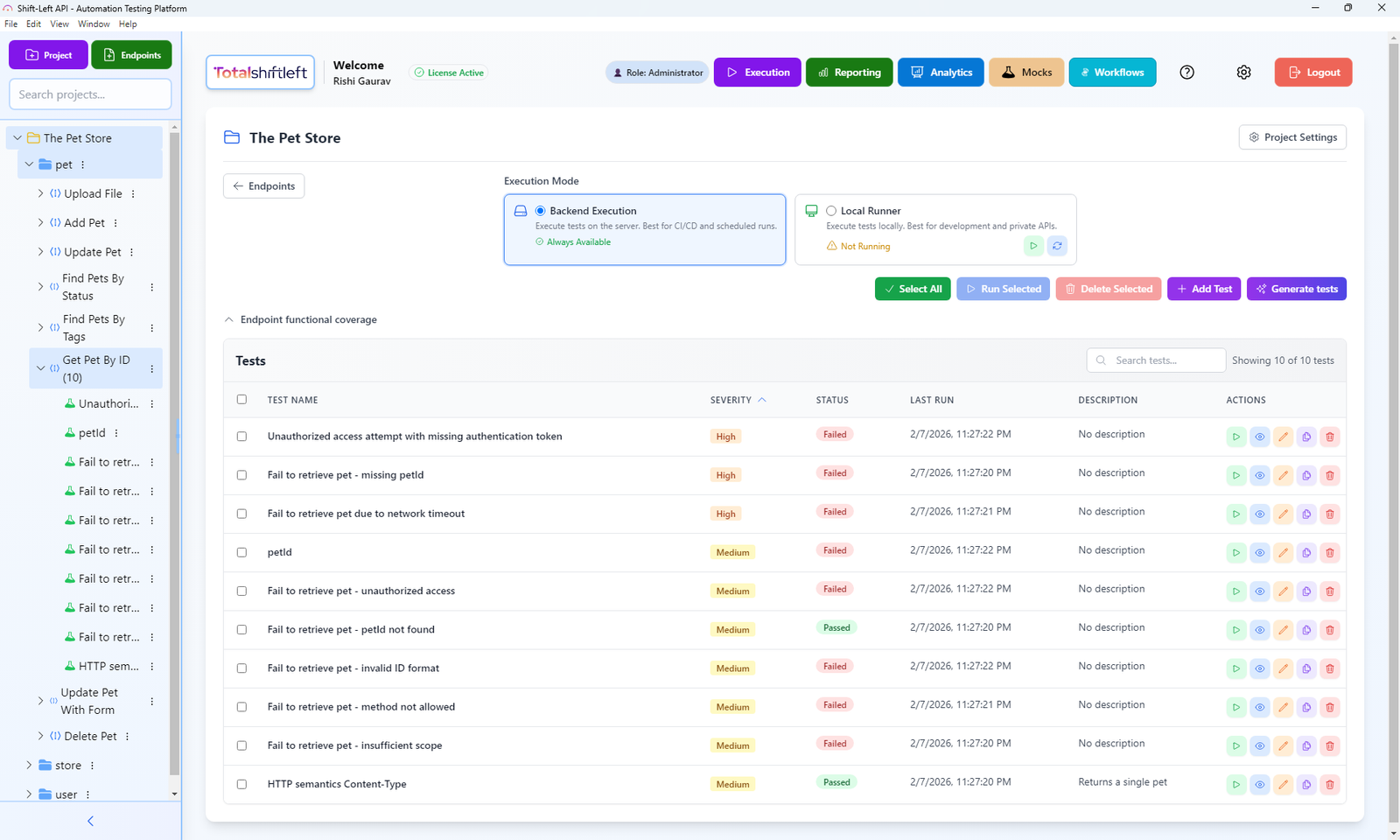
What it is: Shift-Left API is a purpose-built AI-powered no-code API test automation platform designed specifically for shift left workflows. Rather than requiring developers or QA engineers to manually write API tests, Shift-Left API imports your OpenAPI, Swagger, or GraphQL schema and automatically generates a comprehensive test suite using AI — covering happy paths, edge cases, authentication scenarios, and error conditions.
How it works: After uploading your API specification, Shift-Left API's AI engine analyzes the schema, infers business logic from endpoint naming and data types, and generates test cases that go far beyond basic schema validation. Tests are immediately executable, and the platform provides built-in mock servers so you can test services in isolation even before they are fully deployed.
Shift left value: Shift-Left API suits shift left because it removes the primary bottleneck of test automation — the time required to write tests. Developers can upload an OpenAPI spec on the first day of API development and have hundreds of tests running in CI/CD before a single line of implementation code is written. This is true shift left: quality validation running in parallel with, rather than after, development.
CI/CD integration: Shift-Left API has first-party GitHub Actions, Jenkins and Azure DevOps integrations: a pipeline step triggers the suite, polls for the result and publishes JUnit or JSON output, with quality gates that fail the build. GitLab CI, CircleCI, Bitbucket Pipelines and other systems call the same public REST API. Failed quality gates can block merges.
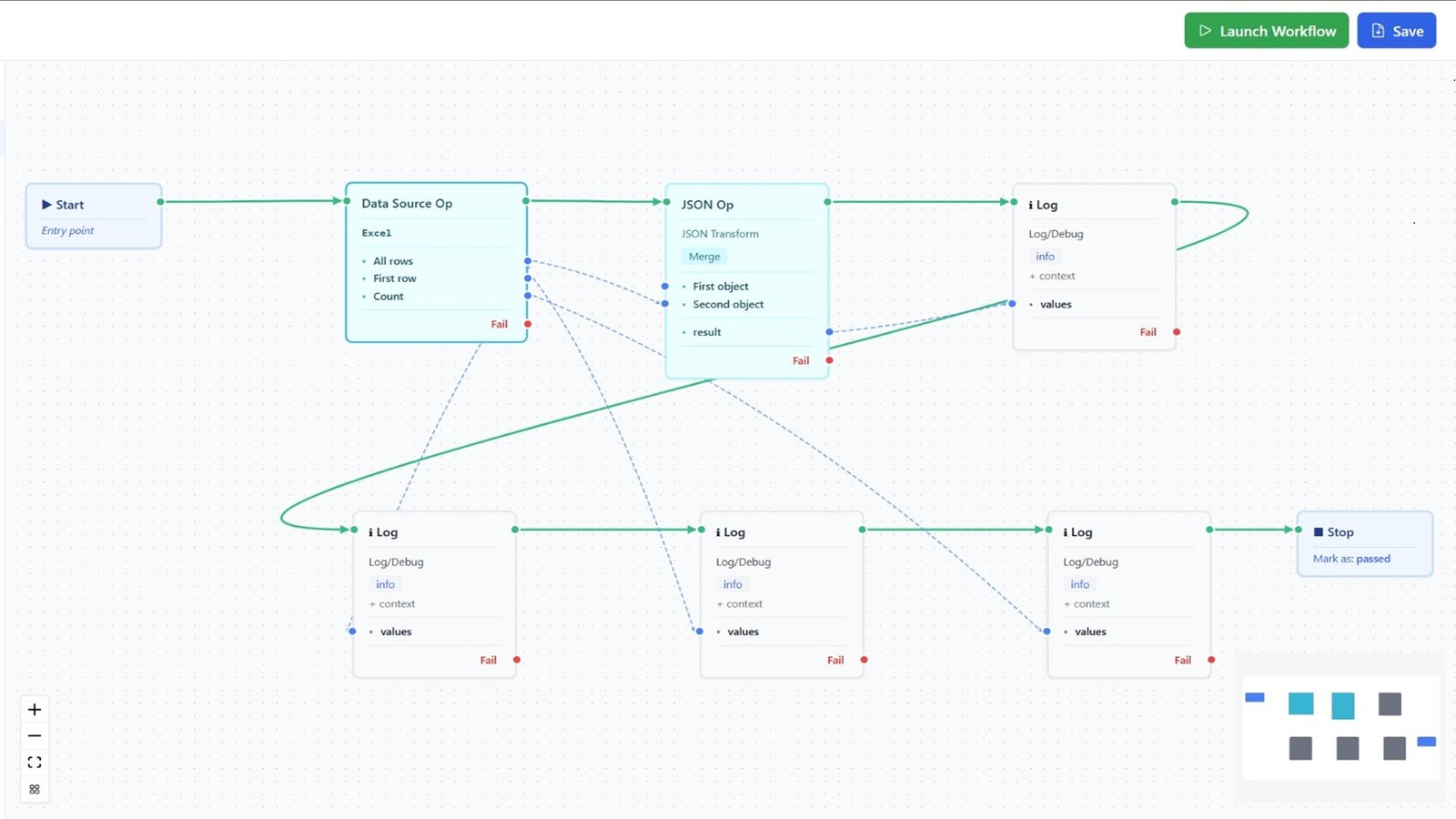
Requirements to tests: the platform also starts from documents, not only specs. Requirements are extracted from Word, PDF and Excel files and traced to tests in a requirements traceability matrix, which also shows performance targets verified under load. Approved use-case requirements can also become end-to-end workflows with each step's data wired to the step that produces it.
Security and performance in the same suite: two paid add-ons (both included in the Trial) push non-functional checks left without a second tool. API security testing generates OWASP-mapped checks beside your existing functional tests and runs them in the same packs and CI jobs, with SARIF/JUnit output and a severity gate. API load testing builds smoke, load, stress, spike, soak and other runs from those same functional tests, with performance targets linked to requirements.
Pros:
- AI auto-generates tests from OpenAPI/Swagger specs in minutes — no coding required
- No-code interface accessible to developers, QA engineers, and even business analysts
- Built-in API mocking for testing services in isolation
- First-party GitHub Actions, Jenkins and Azure DevOps integrations, plus a public REST API for any other pipeline
- Supports REST, GraphQL, and SOAP (JSON-RPC/MCP server testing on Trial and Enterprise)
- Analytics dashboard showing coverage trends, failure patterns, and execution history
- Failed runs grouped into causes with a verdict for each, and AI fix proposals that a person accepts
- Free Citizen Developer Edition (single user, BYO AI key) plus a 15-day Enterprise trial — no credit card required
Ready to shift left with your API testing?
Try our no-code API test automation platform free. Generate tests from OpenAPI, run in CI/CD, and scale quality.
Cons:
- Focused specifically on API testing — does not cover UI/browser testing or unit testing
- Best value for teams with OpenAPI/Swagger specs (though manual endpoint creation is supported)
- Custom pricing for Growth and Enterprise tiers (contact required)
Best for: DevOps teams building API-first systems who want to implement comprehensive API test automation without the overhead of writing and maintaining manual test scripts. Particularly powerful for teams adopting shift left for the first time, as it delivers immediate coverage with minimal setup effort. For microservices teams specifically, see our API testing strategy for microservices.
Website: totalshiftleft.ai | Start Free Trial | View Platform
Postman — API Development and Testing
What it is: Postman is the most widely used API platform in the world, combining API documentation, manual testing, collection-based automated testing, and team collaboration features in a single desktop and cloud application.
Shift left value: Postman's shift left contribution comes primarily through its collection runner, monitor, and Newman CLI tool, which allows Postman test collections to be executed within CI/CD pipelines. Teams can write JavaScript-based test assertions against API responses and run these collections automatically on code commits.
Pros:
- Extremely widespread adoption — most API developers already know Postman
- Good documentation and community resources
- Newman CLI enables CI/CD integration
- Postman monitors for scheduled API checks
- Free tier available for individuals and small teams
Cons:
- Tests must be written manually in JavaScript — significant time investment for comprehensive coverage
- Collections become maintenance burdens as APIs evolve
- No AI-assisted test generation
- Collaborative features are gated behind paid plans
- Test coverage depth depends heavily on how much time developers invest in writing assertions
Best for: Teams that want a familiar, widely adopted tool for manual API exploration and moderate automation, particularly where developers already have JavaScript skills.
Website: postman.com
SonarQube — Static Code Analysis
What it is: SonarQube is a static application security testing (SAST) and code quality analysis platform that scans source code for bugs, vulnerabilities, code smells, and security hotspots without executing the code.
Shift left value: SonarQube is one of the most mature shift left tools available, with decades of development behind its language-specific analyzers. By integrating SonarQube into pull request pipelines, teams catch code quality issues before they ever reach code review, reducing the cognitive load on reviewers and preventing security vulnerabilities from entering the codebase.
Pros:
- Supports 30+ programming languages
- Strong security vulnerability detection (OWASP, CWE coverage)
- IDE plugins allow instant feedback during development
- Quality Gate feature blocks merges on quality threshold violations
- Extensive technical debt tracking and trend analysis
Cons:
- Does not test runtime API behavior — only analyzes source code
- Self-hosted Community Edition requires infrastructure management
- Enterprise features require paid license
- Some false positives require tuning
- Does not replace functional or integration testing
Best for: All DevOps teams as a foundational code quality layer, particularly those in regulated industries where security scanning is mandatory. Works best alongside functional API testing tools like Shift-Left API.
Website: sonarsource.com
GitHub Actions — CI/CD Workflow Automation
What it is: GitHub Actions is GitHub's native CI/CD and workflow automation platform, allowing teams to define automated pipelines as YAML files that run on repository events — pushes, pull requests, releases, and scheduled triggers.
Shift left value: GitHub Actions is not a testing tool itself, but it is the orchestration layer through which all other shift left tools operate. By defining workflows that trigger API tests, static analysis, and unit tests on every pull request, teams create the automated quality gates that are the infrastructure of shift left testing.
Pros:
- Native integration with GitHub repositories — zero additional infrastructure for GitHub users
- Massive marketplace of pre-built Actions for integrating testing tools
- Free for public repositories and generous free tier for private repos
- Matrix builds for testing across multiple environments simultaneously
- Shift-Left API, SonarQube, and most other tools have native GitHub Actions integrations
Cons:
- Requires YAML configuration skill — not truly no-code
- Hosted runners have fixed resource limits that can constrain test parallelism
- Primarily useful for GitHub-hosted code (alternatives needed for GitLab, Bitbucket)
- Does not provide testing capabilities itself — must be combined with dedicated testing tools
Best for: Teams using GitHub for source control who want a tightly integrated, low-overhead CI/CD platform to orchestrate their shift left testing stack.
Website: github.com/features/actions
Jest and JUnit — Unit Testing Frameworks
What it is: Jest (for JavaScript/TypeScript) and JUnit (for Java) are the dominant unit testing frameworks in their respective ecosystems, enabling developers to write and run isolated tests for individual functions, classes, and modules.
Shift left value: Unit testing is the most granular form of shift left testing, catching logic errors at the function level before they propagate to API or UI layers. A robust unit test suite is the foundation of any shift left strategy, and Jest and JUnit are the workhorses that power unit testing in the two largest developer ecosystems.
Pros:
- Jest: zero-config setup for JavaScript/TypeScript projects, excellent mocking, watch mode for instant feedback
- JUnit: mature ecosystem, excellent IDE integration, strong Spring Boot support
- Both integrate seamlessly with all major CI/CD platforms
- Both support code coverage reporting that integrates with SonarQube and other analysis tools
- Both are free and open source
Cons:
- Unit tests only validate isolated logic — do not catch integration or API contract issues
- Test suites require ongoing developer investment to maintain coverage
- High coverage percentages do not guarantee absence of integration bugs
- No support for API-level testing or contract validation
Best for: Development teams as the foundational layer of a shift left testing strategy. Essential for all teams but must be combined with API testing tools like Shift-Left API for complete coverage.
Websites: jestjs.io | junit.org
Selenium — Browser and UI Testing
What it is: Selenium is the foundational open-source framework for browser automation and UI testing, supporting all major browsers and programming languages through its WebDriver protocol.
Shift left value: Selenium contributes to shift left primarily in teams building web applications that require end-to-end UI verification. By automating browser interactions as part of CI/CD pipelines, teams can validate user-facing functionality automatically after each deployment rather than relying on manual QA cycles.
Pros:
- Supports all major browsers (Chrome, Firefox, Safari, Edge)
- Language-agnostic — bindings for Java, Python, JavaScript, C#, Ruby
- Large community and extensive documentation
- Grid for parallel test execution across multiple browser/OS combinations
- Free and open source
Cons:
- High maintenance burden — UI tests break frequently with UI changes
- Slow compared to API tests — full UI test suites can take hours
- Requires WebDriver management and browser infrastructure
- Not suitable for API testing or shift left at the service level
- Steeper learning curve than many modern alternatives (Playwright, Cypress)
Best for: Teams that require cross-browser UI validation and are willing to invest in test maintenance infrastructure. Best used sparingly within a shift left stack, with the majority of coverage handled at lower layers by API tests and unit tests.
Website: selenium.dev
JIRA with Xray — Test Management
What it is: Xray is a test management plugin for JIRA that connects test cases, test execution records, and defect tracking within the JIRA ecosystem, providing traceability between requirements, tests, and defects.
Shift left value: While not a testing execution tool itself, Xray provides the management and traceability layer that enterprise DevOps teams require to govern shift left testing at scale. It connects manual and automated test results to JIRA stories and epics, creating audit trails that satisfy compliance requirements.
Pros:
- Native JIRA integration — no context switching for teams already using JIRA
- Requirement-to-test traceability for compliance reporting
- Supports both manual and automated test execution records
- Agile-friendly test planning with sprint-based views
- Xray Cloud and Xray Server/DC editions available
Cons:
- JIRA licensing required — significant cost for large teams
- Adds process overhead that can slow down small, fast-moving teams
- Test execution happens in external tools — Xray only records results
- Configuration complexity for first-time enterprise implementations
Best for: Enterprise DevOps teams with compliance requirements that mandate test traceability, particularly in regulated industries like finance, healthcare, and government.
Website: xpand-it.com/xray
AI-Powered Shift-Left Testing Tools
AI has changed which layer of the testing pyramid benefits most from automation. Where "shift left" used to mean writing tests earlier, AI-powered shift left tools mean generating and maintaining tests automatically — closing the gap between "we should test this" and "this is tested" from days to minutes. Here's how the AI-driven tools break down by layer:
| Tool | Layer | What AI Does | No-Code |
|---|---|---|---|
| Shift-Left API | API testing | Generates full test suites (happy paths, edge cases, auth, negative tests) from an OpenAPI/GraphQL schema and requirement documents; explains failed runs as causes; a Project Assistant answers from the project's own data and acts only when you accept | Yes |
| Diffblue Cover | Unit testing (Java) | Auto-writes and maintains JUnit tests by analyzing method behavior, without a human writing assertions | Yes |
| Qodo (formerly CodiumAI) | Unit testing (multi-language) | Suggests test cases and edge cases inline in the IDE as code is written, with an AI chat interface for test refinement | Partial |
| Mabl | UI/browser testing | AI-native test authoring plus auto-healing locators that adapt when the UI changes, reducing the maintenance burden that plagues Selenium suites | Yes |
| Applitools | Visual testing | AI-powered visual regression detection that ignores rendering noise (anti-aliasing, dynamic content) and flags only meaningful visual changes | Partial |
| Testim (Tricentis) | UI/browser testing | AI-stabilized element locators and codeless test authoring for web and mobile | Yes |
The pattern across all of these: AI is best at the parts of testing that are mechanical and schema- or behavior-derivable (generating the test cases, keeping locators stable) and still needs human judgment for business-logic edge cases and what "correct" means for a specific product. For API-first teams, this makes Shift-Left API the highest-leverage AI tool to adopt first — API contracts are the most schema-rich, most automatable layer, and API bugs are usually the ones that cascade into the most expensive production incidents.
Free PDF (10 pages)
Shift Left Testing Playbook
Move testing earlier in your SDLC with a proven adoption roadmap. Includes CI/CD architecture, tool stack recommendations, and metrics to track success.
Download FreeShift-left testing tools comparison table
| Tool | Pricing | No-Code | CI/CD Integration | API Testing | Best For |
|---|---|---|---|---|---|
| Shift-Left API | Free Citizen Developer Edition + 15-day trial; Professional/Enterprise custom | Yes — fully no-code | First-party GitHub Actions, Jenkins, Azure DevOps; REST API for others | Yes — REST, GraphQL, SOAP | AI-powered API test automation, shift left for API teams |
| Postman | Free tier; paid from $14/user/mo | Partial (GUI + JS required) | Via Newman CLI | Yes — REST, GraphQL, SOAP | Manual API exploration + moderate automation |
| SonarQube | Community free; paid from ~$150/mo | No — code analysis only | Yes (native integrations) | No — source analysis only | Code quality and security scanning |
| GitHub Actions | Free tier; paid per compute minute | No — YAML required | Is the CI/CD platform | No — orchestrates other tools | CI/CD orchestration and pipeline automation |
| Jest / JUnit | Free (open source) | No — requires coding | Yes (universal) | No — unit testing only | Unit test coverage for JS/Java codebases |
| Selenium | Free (open source) | No — requires coding | Yes (with setup) | No — UI/browser testing | Cross-browser UI test automation |
| JIRA + Xray | JIRA license + Xray from $10/mo | Partial (test management UI) | Yes (records results) | No — test management only | Enterprise test management and traceability |
Real-World Implementation: Building a Shift Left Stack with Shift-Left API
To make this concrete, consider a DevOps team building a financial services API platform with 15 microservices. Before adopting Shift-Left API, their quality process looked like this: developers wrote code, pushed to a shared staging environment, QA engineers manually tested API endpoints using Postman, filed bugs in JIRA, and development fixed them before the next release cycle. This process took two weeks per release cycle and caught roughly 60% of API defects before they reached production.
After implementing a shift left stack anchored by Shift-Left API, the process transformed:
Day 1 of a new feature: The API developer uploads the OpenAPI spec for the new endpoint to Shift-Left API. Within minutes, AI generates 40+ test cases covering all status codes, authentication scenarios, required field validation, and edge cases. These tests run against the mock server while the real implementation is still being built.
During development: Shift-Left API's CI/CD integration triggers on every push to the feature branch. Tests run automatically and post results as a GitHub check. Developers see test failures immediately in their pull request — not in a separate QA tool or after a manual test cycle.
At pull request time: The complete test suite runs as a mandatory PR check. Static analysis via SonarQube runs in parallel. Unit tests via Jest run simultaneously. The developer sees a unified quality picture before requesting review.
After merge to main: Shift-Left API runs the full regression suite against the staging environment. Any contract violations or regression failures send Slack alerts and create JIRA tickets automatically.
The result: the team's production API defect rate dropped by 52% in the first quarter. Release cycles compressed from two weeks to three days. QA engineers shifted from repetitive manual testing to high-value exploratory testing and test strategy work.
How to Choose the Right Shift Left Tools
Building a shift left testing stack is not about selecting every tool on this list — it is about choosing the right combination for your specific context. Here is a decision framework:
Start with your primary testing gap. Most teams have more coverage at the unit level (because frameworks like Jest make unit testing natural) and far less at the API integration level. If your biggest gap is API testing, Shift-Left API should be your first investment. If your biggest gap is code security, start with SonarQube.
Understand the benefits of shift left testing to build organizational buy-in. Tool adoption succeeds when stakeholders understand the cost, speed, and quality improvements that shift left delivers.
Assess your team's technical capacity. If your team has limited time to write and maintain test code, no-code tools like Shift-Left API deliver far more ROI than code-based tools like REST Assured or custom Selenium scripts. If your team has strong test automation engineers who can invest in framework development, code-based tools offer more customization at higher maintenance cost.
Consider your CI/CD maturity. Teams without mature CI/CD pipelines should invest in that foundation first — GitHub Actions or Jenkins configuration — before layering in additional testing tools. Without automated pipeline triggers, shift left tools lose most of their value because tests only run when someone remembers to run them. See our CI/CD testing pipeline guide for a step-by-step buildout.
Factor in your API architecture. Teams with well-documented OpenAPI/Swagger specs will see the fastest time-to-coverage with Shift-Left API, which generates tests directly from the schema. Teams without API documentation may need to invest in documentation first, which is itself a quality-improving practice worth doing.
Plan for long-term maintenance. The best shift left tool is the one your team will actually maintain and use six months from now. No-code platforms like Shift-Left API reduce maintenance burden dramatically compared to hand-written test scripts, which is why they tend to sustain adoption better over time.
Best Practices for Adopting Shift Left Testing Tools
Start with one tool and one pipeline. The most common failure mode for shift left initiatives is trying to implement too many tools simultaneously. Choose the highest-impact tool for your biggest coverage gap, get it running in one pipeline, prove the value, then expand.
Build your overall test automation strategy before selecting tools. Tools implement strategy — they do not replace it. Define your automation pyramid, coverage targets, and ROI metrics first.
Define quality gates before configuring tools. Decide what constitutes a passing quality gate before you configure any tool. What percentage of API tests must pass? What SonarQube quality gate threshold is required for merge? Having clear criteria prevents the "tests are red but we need to ship" debates that erode shift left culture.
Make test results visible in pull requests. Shift left only works if developers see test results within their existing workflow. Ensure every tool surfaces results as pull request checks or comments, not in separate dashboards that developers rarely visit.
Treat test maintenance as a first-class engineering task. Tests that are never updated when APIs change quickly become technical debt that teams disable. Schedule regular test review sessions and budget sprint time for test maintenance — or choose tools like Shift-Left API that minimize maintenance burden through AI-assisted test updates.
Measure and share shift left metrics. Track defect escape rate (defects found in production vs. found in development), mean time to detect, and test execution time. Share these metrics in team retrospectives and with leadership. Visible improvement data sustains organizational commitment to shift left practices.
Create a culture of ownership over blame. Shift left testing works best when developers view test failures as useful information rather than personal criticism. Frame failed tests as "the system caught this for us" rather than "you broke this." Leadership tone on quality culture is as important as tooling choices.
Shift Left Tool Selection Checklist
Use this checklist when evaluating shift left testing tools for your DevOps team:
- Developer accessibility: Can developers use this tool without deep QA expertise or specialized training?
- CI/CD integration: Does the tool integrate natively with your CI/CD platform and block merges on failure?
- Feedback speed: Does the tool return results fast enough to keep developers in their workflow context (ideally under 5 minutes)?
- Coverage depth: Does the tool cover the right layer of your testing pyramid for your biggest coverage gap?
- Maintenance burden: What is the ongoing effort required to keep tests current as code and APIs evolve?
- Actionable reporting: Do test results clearly identify what broke and where, without requiring extensive investigation?
- Team adoption likelihood: Will developers and QA engineers actually use this tool consistently, or will it be adopted and abandoned?
- Total cost of ownership: Beyond license cost, what is the infrastructure, setup, and maintenance cost over 12 months?
See also: contract testing in our learn hub for the underlying concept.
Related reading: Shift Left Testing Challenges and How to Solve Them
Frequently asked questions about shift-left testing tools
What are shift left testing tools?
Shift left testing tools are software platforms and utilities that move quality assurance activities earlier in the software development lifecycle — from late-stage QA phases into development, code review, and CI/CD pipelines. Examples include API test automation platforms like Shift-Left API, static analysis tools like SonarQube, and unit testing frameworks like Jest and JUnit.
Which shift left testing tool is best for API testing?
Shift-Left API is purpose-built for shift left API testing. It imports OpenAPI/Swagger specifications and uses AI to auto-generate comprehensive test suites in minutes, with no coding required. It integrates natively with CI/CD pipelines, supports REST, GraphQL, and SOAP, and provides built-in API mocking and analytics.
How do shift left testing tools integrate with DevOps pipelines?
Most modern shift left testing tools integrate via CLI commands, Docker containers, or native plugins for CI/CD platforms like GitHub Actions, Jenkins, and GitLab CI. Shift-Left API provides first-party GitHub Actions, Jenkins and Azure DevOps integrations, plus a CI runner and public REST API for GitLab CI and other systems, so API test runs trigger on every pull request and return pass/fail status to the pipeline within minutes.
What is the ROI of adopting shift left testing tools?
Industry research from IBM and NIST consistently shows that defects found in development cost 10–100x less to fix than those found in production. Teams using shift left testing tools typically report 40–60% reductions in post-release defects, faster release cycles, and significantly lower QA overhead once automation is running in CI/CD.
What are the best AI-powered shift left testing tools?
AI-powered shift left tools vary by testing layer. For API testing, Shift-Left API generates full test suites directly from an OpenAPI spec. For unit testing, Diffblue Cover auto-writes JUnit tests and Qodo (formerly CodiumAI) suggests test cases inline in the IDE. For UI testing, Mabl and Testim use AI-stabilized locators to reduce the maintenance burden that breaks traditional Selenium suites, and Applitools uses AI for visual regression detection. The common thread is generating and maintaining tests automatically rather than just running them earlier.
Wiring the toolchain into one pipeline
The tools only shift anything left if they run before merge. This is the whole shift-left toolchain — lint, contract diff, generated tests, security scan — as a single pull-request job:
# .github/workflows/shift-left.yml
name: Shift-left checks
on: pull_request
jobs:
  quality:
    runs-on: ubuntu-latest
    steps:
      - uses: actions/checkout@v4
        with: { fetch-depth: 0 }

      - name: Design (Spectral)
        run: npx @stoplight/spectral-cli lint openapi.yaml --fail-severity error

      - name: Contract (oasdiff)
        run: |
          git show origin/${{ github.base_ref }}:openapi.yaml > /tmp/base.yaml
          oasdiff breaking /tmp/base.yaml openapi.yaml --fail-on ERR

      - name: Behaviour (Schemathesis against a PR preview)
        run: |
          pip install schemathesis
          schemathesis run openapi.yaml --url "$PREVIEW_URL" --checks all

      - name: Security (ZAP API scan)
        uses: zaproxy/action-api-scan@v0.9.0
        with: { target: '${{ env.PREVIEW_URL }}/openapi.yaml', format: openapi }
Sources and further reading
- DORA State of DevOps research — the multi-year dataset behind the four delivery metrics.
- Spectral (Stoplight) — the OpenAPI linter most governance programmes standardise on.
- Schemathesis documentation — property-based testing driven straight from an OpenAPI spec.
Key takeaways
- Building an effective shift left testing stack in 2026 requires combining tools that operate at different layers of your software delivery pipeline.
- Static analysis with SonarQube catches code quality issues before they propagate.
- Unit testing with Jest or JUnit validates individual components in isolation.
- CI/CD orchestration with GitHub Actions ensures all quality checks run automatically on every change.
- But for DevOps teams building API-first systems — which is most teams in 2026 — the highest-impact investment is API test automation, and Shift-Left API is built specifically for that category.
- For the broader testing architecture these tools fit within, see our DevOps testing strategy guide and understand how pre-production tools complement production monitoring in shift left vs shift right testing.
By generating comprehensive API test suites from your OpenAPI specifications using AI, Shift-Left API eliminates the primary bottleneck that prevents teams from achieving genuine shift left coverage at the API layer: the time and expertise required to write tests. Teams that add Shift-Left API to their shift left stack consistently report the fastest time-to-coverage, the lowest maintenance burden, and the most dramatic reductions in production API defects. If your team is serious about shift left testing in 2026, start with a free 15-day trial and see how many API bugs you catch before they ever reach staging.
Start your free trial today — no credit card required. Working solo? Get the free Citizen Developer Edition — single-user, full authoring + AI generation.
Related: What Is Shift Left Testing? Complete Guide | Shift Left Testing Strategy | Shift Left vs Shift Right Testing | API Testing Strategy for Microservices | How to Build a CI/CD Testing Pipeline | DevOps Testing Strategy | No-code API testing platform | Start Free Trial
Ready to shift left with your API testing?
Import your OpenAPI spec and get a runnable test suite, in our cloud or on your own infrastructure.