LLM Evals: How to Build a Suite That Catches Regressions
How to build an LLM eval suite that actually catches regressions — dataset design, scoring functions, LLM-as-judge calibration, thresholds, CI gating and the tooling landscape.
A practical LLM testing method — deterministic shell versus probabilistic core, invariant and tolerance assertions, golden-set evals with thresholds, safety and bias tests, CI gates, governance and the open-source tools that fit each layer.
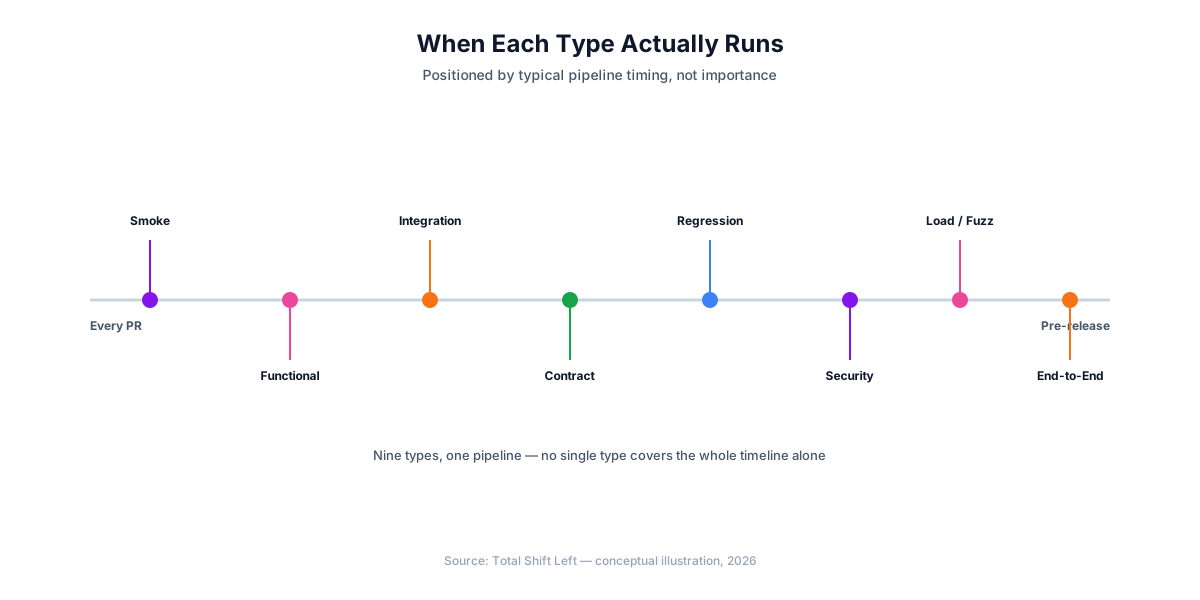
The 9 distinct types of API testing explained — what each one catches, when to run it in your pipeline, and how they fit together into a complete test strategy.
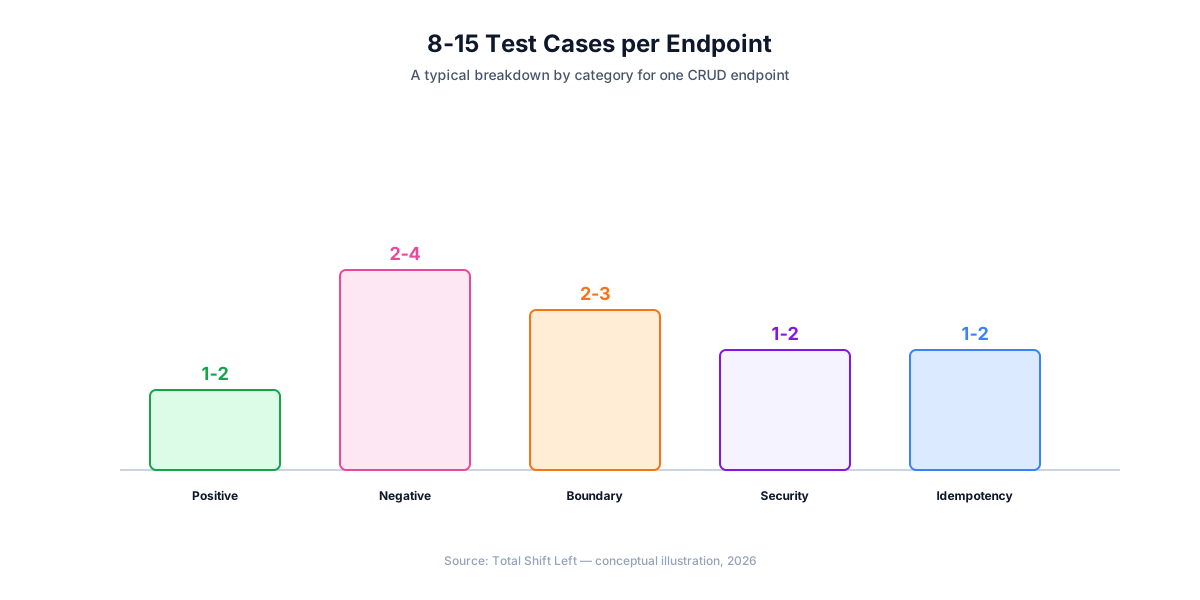
A practical template for writing API test cases, with worked examples across positive, negative, boundary, and security scenarios — and how each one maps directly onto an automated test.
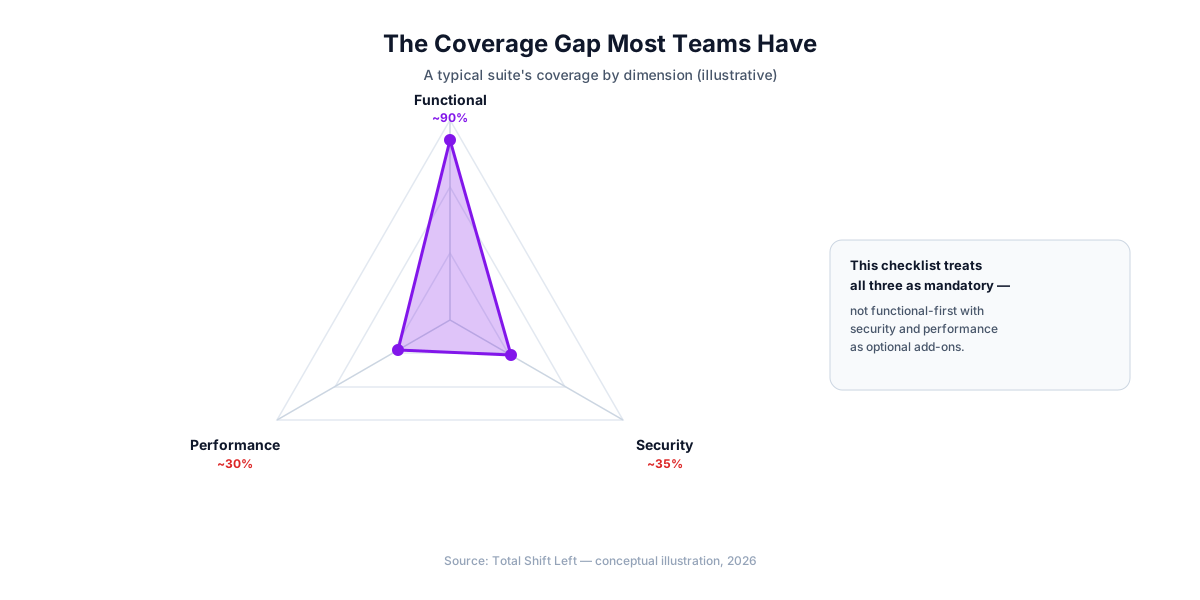
A complete API testing checklist across functional, security, and performance dimensions — every item explained, mapped to what actually breaks in production, with a downloadable version for CI/CD gating.
How testing changes between REST, GraphQL and gRPC, and where SOAP fits: contract formats, error semantics, security surface, mocking, observability and tooling, with the same check written in each protocol.
Risk-based test selection keeps enterprise CI/CD fast without losing coverage: test impact analysis, an always-run risk set, ML ranking, a selection script, and the audit story for not running every test.
What test data management is and how to do it well: synthetic generation, masking, subsetting, per-run isolation, TDM in microservices and CI/CD, enterprise governance, tools and worked examples.
Master database testing strategies for DevOps teams. Covers schema validation, migration testing, data integrity checks, performance baselines, and CI/CD pipeline integration.