10 Best API Mocking & Service Virtualization Tools (2026)
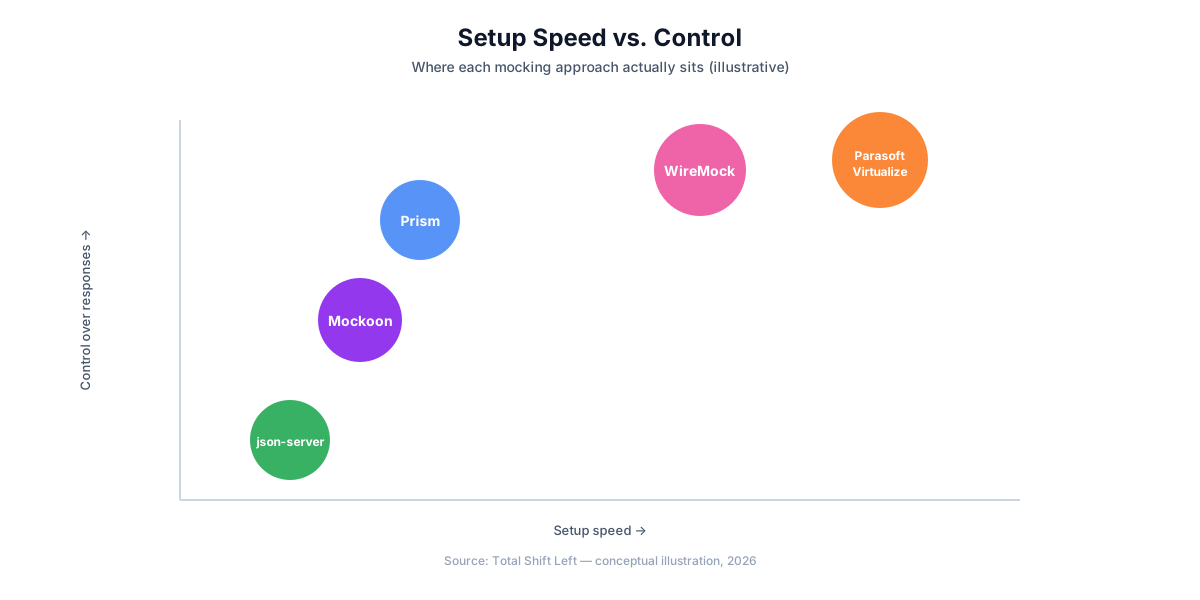
The 10 best API mocking and service virtualization tools in 2026, compared across spec-driven, standalone stub server, and enterprise virtualization categories.
30 articles
API testing tools and platforms compared — mocking, reporting, coverage, and the frameworks teams build test infrastructure around.
The 10 best API mocking and service virtualization tools in 2026, compared across spec-driven, standalone stub server, and enterprise virtualization categories.
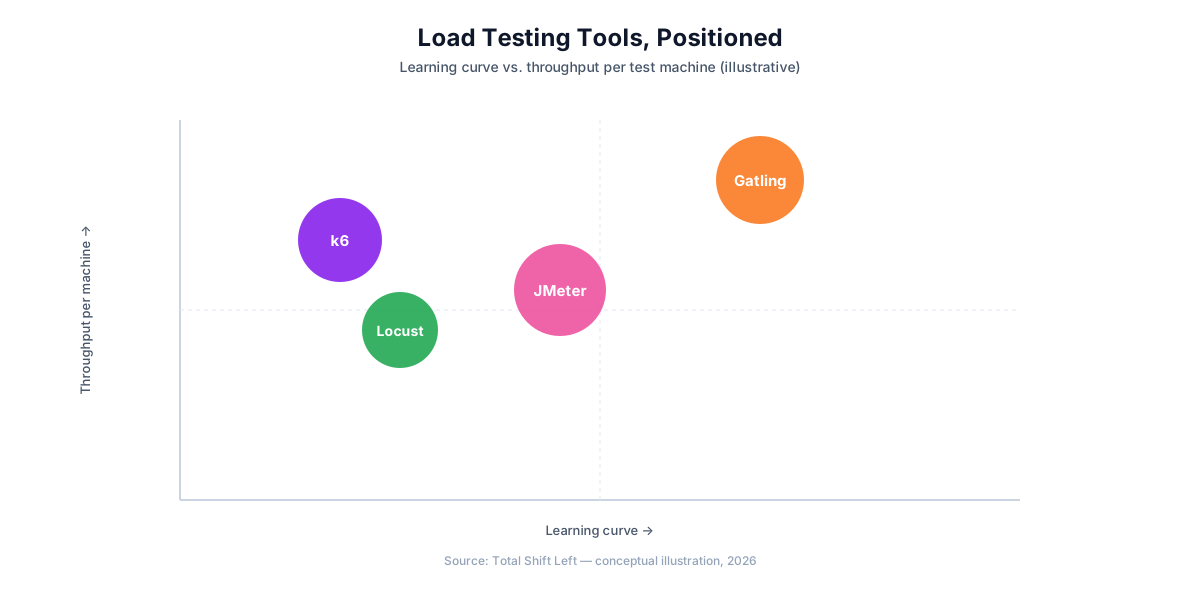
The 10 best API load testing tools in 2026, compared on scripting language, protocol support, CI/CD fit, and pricing model — free/open source and commercial.
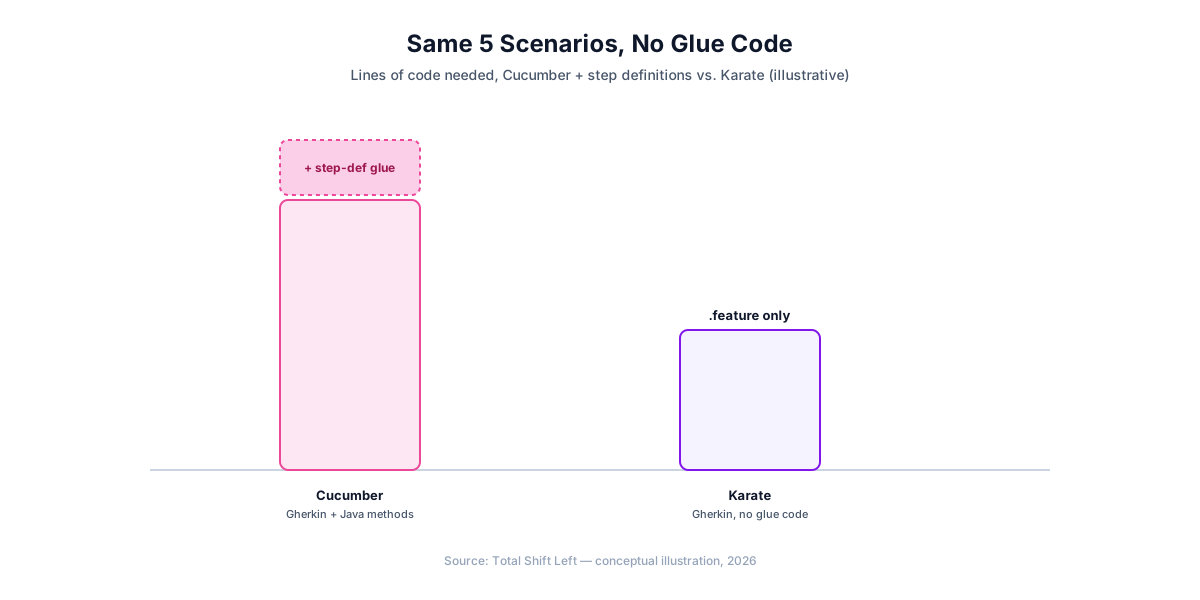
A Karate framework tutorial for API testing: Gherkin .feature files with no step-definition code, built-in match assertions, Scenario Outline data-driven tests, and running the suite in CI/CD with Maven.
A Cypress API testing tutorial: cy.request() basics, chaining requests with aliases, custom commands for auth, parametrized tests, and running the suite in CI/CD — with working JavaScript for every example.
A beginner's guide to Postman for API testing: building requests, pm.test() assertions, Collections and Environments, chaining requests, and running everything headless in CI/CD with Newman.
A k6 quick-start for API load testing: virtual users, check() and thresholds, staged ramp-up, POST requests, and running k6 in CI/CD with a non-zero exit code on threshold breach — with working scripts.
The 10 best public and dummy APIs for testing in 2026 — fake CRUD data, HTTP behavior simulation, real production-grade APIs, and one built specifically for test-automation practice.
A JMeter tutorial for API load testing: building a Test Plan with Thread Groups and HTTP Samplers, JSON Assertions, CSV-driven parametrization, and running it headless in CI/CD — with the exact commands and settings.
The 8 best WebSocket testing tools in 2026 — CLI clients, GUI tools, browser-integrated monitoring, and load testing — and what's actually different about testing a persistent connection vs a single request.