Automate with AI: 10 API Test Workflows You Can Run Today (2026)
Ten concrete API testing workflows that engineering teams automate with Shiftleft AI today — from spec-to-suite generation to AI-driven failure triage and breaking change detection.
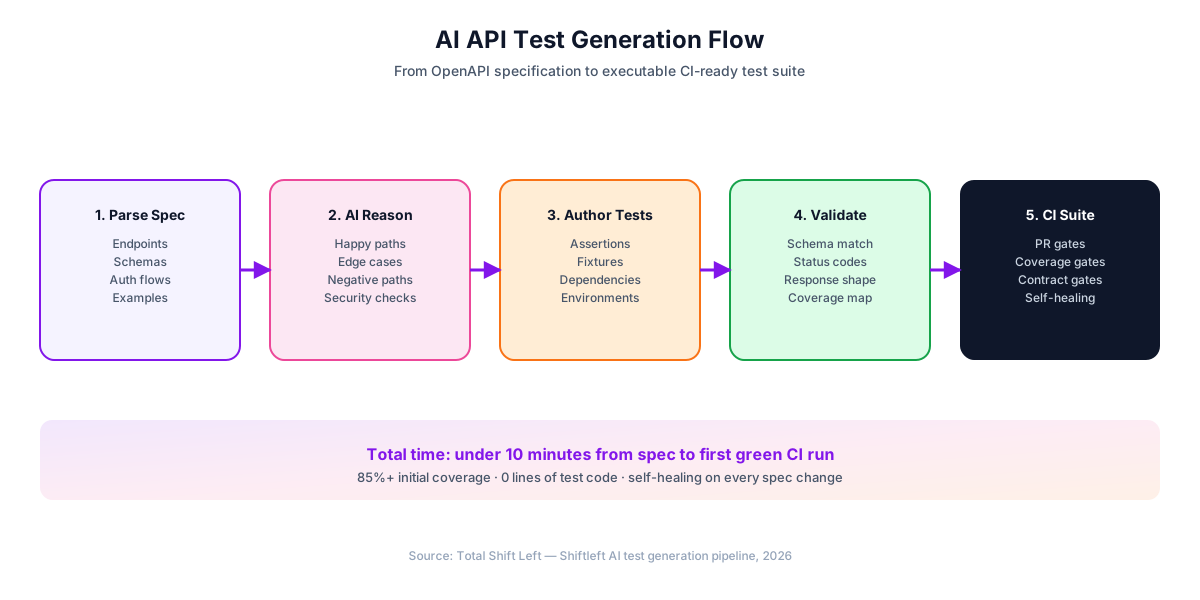
How does an AI engine turn an OpenAPI spec into a complete CI-ready test suite? Inside the Shiftleft AI generation pipeline — parsing, reasoning, authoring, validating, and CI delivery.
An enterprise test data management strategy that handles PII, PHI, and cardholder data without expanding compliance scope or breaking developer velocity. Synthetic generation, masking pipelines, and the framework that scales across teams.
Shiftleft AI runs as a CI-native pipeline step that gates every PR on coverage, contract, and assertion checks — without Newman, custom scripts, or plugin shims. Here is the 2026 implementation guide.
Shift Left AI is the category of AI-first API testing platforms that move quality work earlier and let AI do the authoring. This is the 2026 definitive guide — what it is, why it matters, how it works, and how to adopt it.
How enterprise QA leadership designs a test management strategy that scales across hundreds of services, holds up to audit, and doesn't collapse into a tool-of-the-month problem. Frameworks, RACI patterns, and the metrics that matter.
How platform-engineering teams roll out a single API testing standard across dozens of product teams without forcing a common toolchain. Federation, golden paths, evidence formats, and the trade-offs that actually matter.
How GDPR, Schrems II, and equivalent data-residency rules apply to API testing — captured payloads, AI inference paths, and run-report storage. EU SCC, transfer impact assessments, and the patterns that survive a DPA review.
Schema-first API development designs the OpenAPI contract before writing implementation code, enabling parallel work, auto-generated tests, mock servers, and continuous contract enforcement. The 2026 playbook for engineering teams.