Comparisons
REST vs GraphQL vs gRPC: How Testing Differs (2026)
How testing changes between REST, GraphQL and gRPC — contract format, error semantics, security surface and tooling — with the same check written three ways.
13 min readSmeet Gohel
Tool and approach comparisons.
Comparisons: API test automation tools, shift-left vs traditional testing, and best tools for 2025.
How testing changes between REST, GraphQL and gRPC — contract format, error semantics, security surface and tooling — with the same check written three ways.
Pact vs Postman for contract testing — what consumer-driven contracts prove that schema assertions cannot, where Postman is genuinely enough, and how to run both.
REST Assured vs Karate compared on language, learning curve, parallelism, mocking, reporting and CI — with the same test written in both.
curl vs Postman compared on scripting, reproducibility, CI, debugging and collaboration — with the exact curl flags worth knowing and how to convert between the two.
Swagger vs Postman explained — spec-first versus request-first, what each tool owns, the 10 differences that decide the workflow, and how to convert between them.
Postman vs Insomnia compared on workspace model, OpenAPI support, CLI, plugins, pricing and CI — and how to move a collection between them without losing the assertions.
Bruno vs Postman compared on storage model, git workflow, offline use, CLI, pricing and CI — with the migration path in both directions and the question neither tool answers.
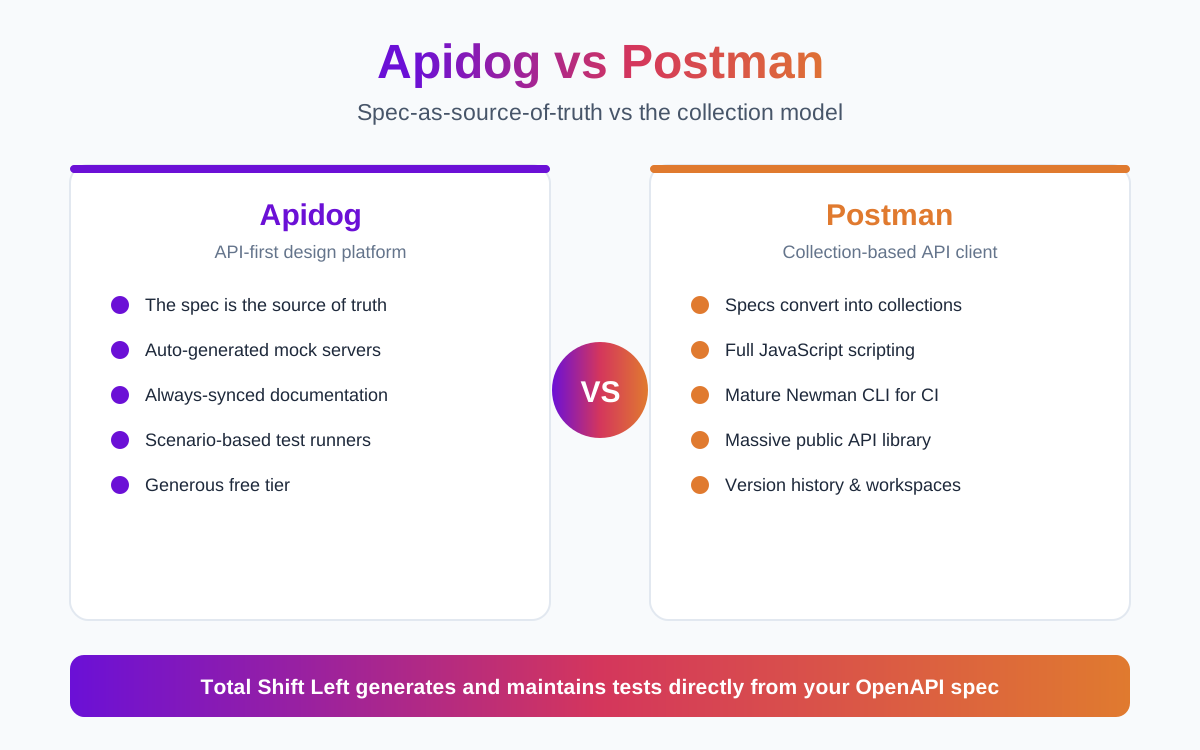
Apidog and Postman both handle API design, testing, and documentation, but their architectural models differ fundamentally. Apidog treats the OpenAPI spec as the single source of truth, while Postman converts specs into independent collections. This focused comparison covers the differences that matter for team productivity.
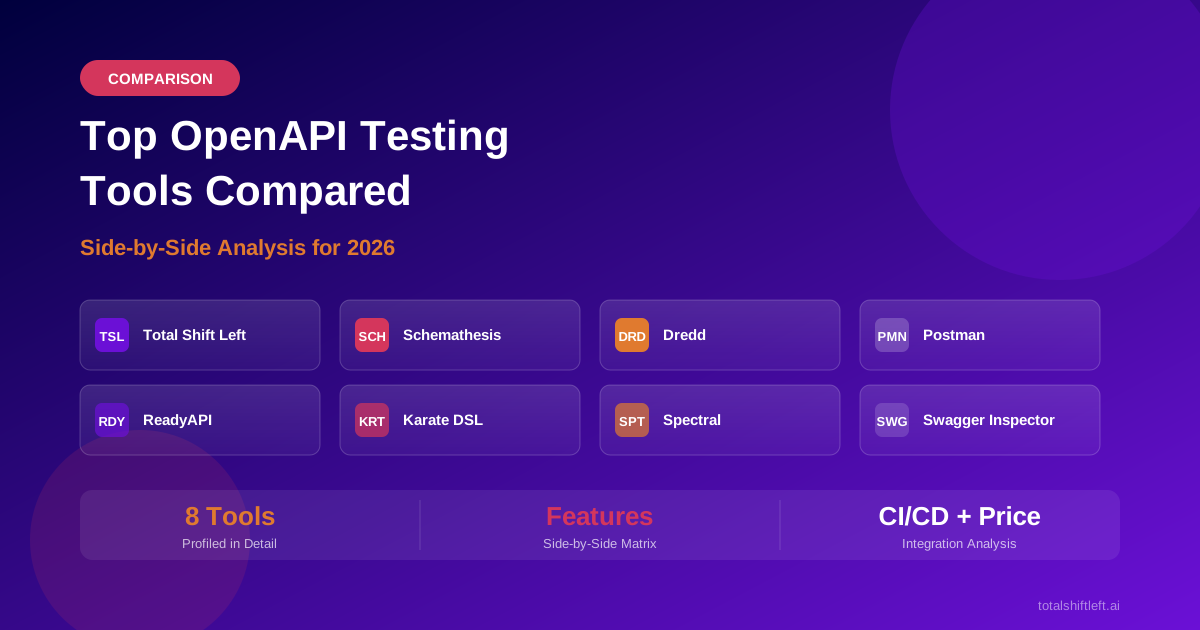
Compare the best OpenAPI testing tools for automated test generation, contract validation, and CI/CD integration. Side-by-side analysis of Total Shift Left, Schemathesis, Dredd, Postman, and more.