Bruno vs Postman (2026): Git-Native vs Cloud API Client
Bruno vs Postman compared on storage model, git workflow, offline use, CLI, pricing and CI — with the migration path in both directions and the question neither tool answers.
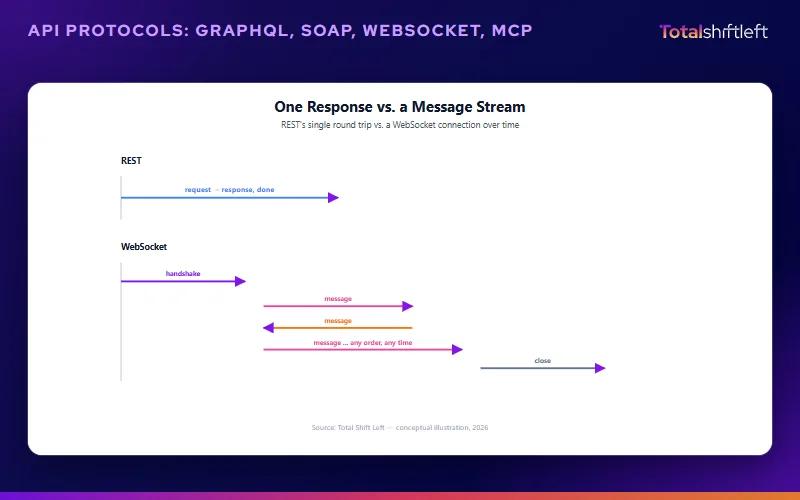
The 8 best WebSocket testing tools in 2026 — CLI clients, GUI tools, browser-integrated monitoring, and load testing — and what's actually different about testing a persistent connection vs a single request.
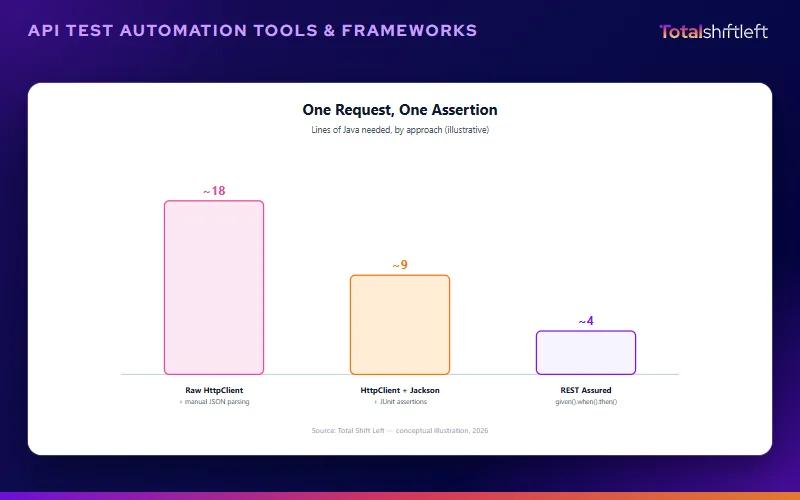
A hands-on REST Assured tutorial for Java API testing: fluent given-when-then syntax, JSON schema validation, parametrized tests with JUnit 5, and a Maven-based GitHub Actions CI pipeline — with working code.
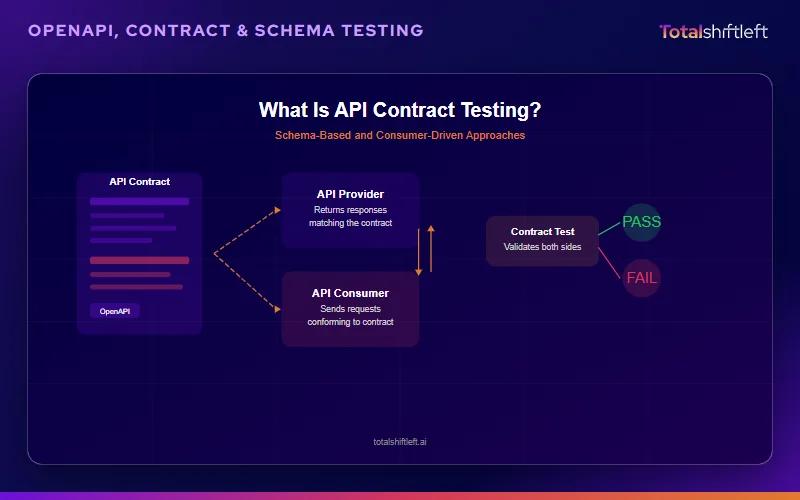
API contract testing verifies that providers and consumers honor a shared interface contract (an OpenAPI schema or a Pact consumer contract), so breaking changes are caught in the pull request and services can deploy independently. Examples, approaches, a CI workflow and tools.
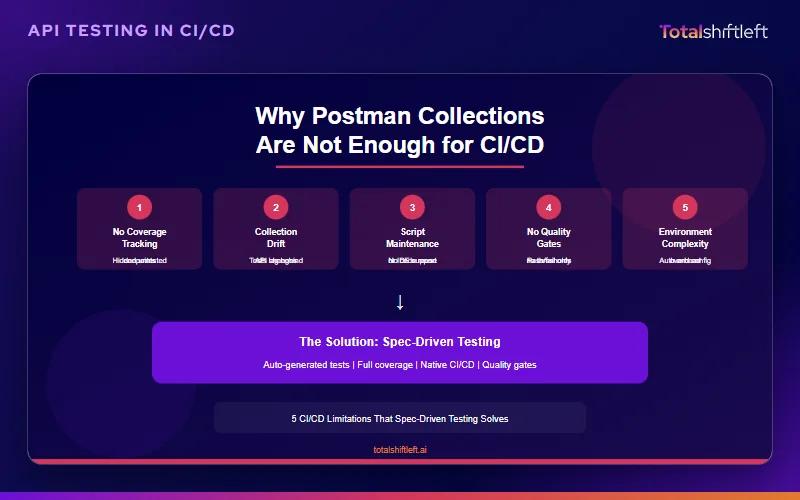
Postman collections CI/CD limitations include no coverage tracking, collection drift from the live API, unmaintainable test scripts, missing quality gates, and environment configuration complexity. These five structural gaps prevent teams from achieving reliable automated API testing in their delivery pipelines.
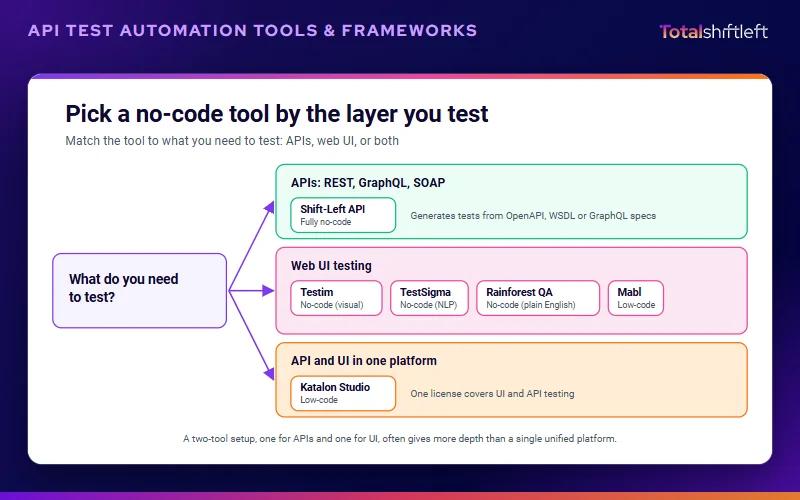
No-code test automation has transformed from a niche capability to a mainstream quality engineering strategy in 2026. This guide compares the best no-code test automation platforms — with a focused look at Shift-Left API for no-code API testing — to help teams eliminate manual testing bottlenecks without writing a single line of code.
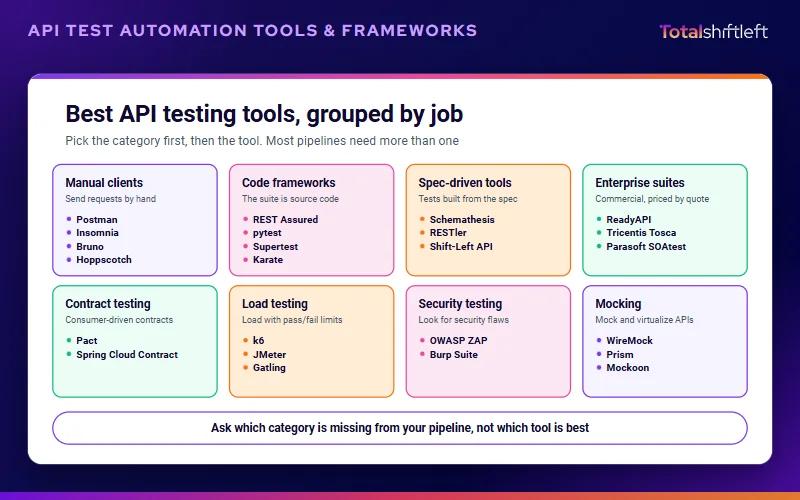
More than 25 API testing and API automation testing tools compared by the job they do: manual clients, code-first frameworks, spec-driven generators, enterprise suites, contract, performance, security and mocking tools, with the pricing model and licence for each and a section for enterprise and regulated teams.
Black box testing and white box testing represent two fundamentally different perspectives on software validation—one tests behavior without knowledge of internal implementation, the other uses internal knowledge to design tests that validate code paths directly. APIs present a uniquely natural fit for black box testing, and Shift-Left API's OpenAPI-driven test generation embodies the black box philosophy at scale.
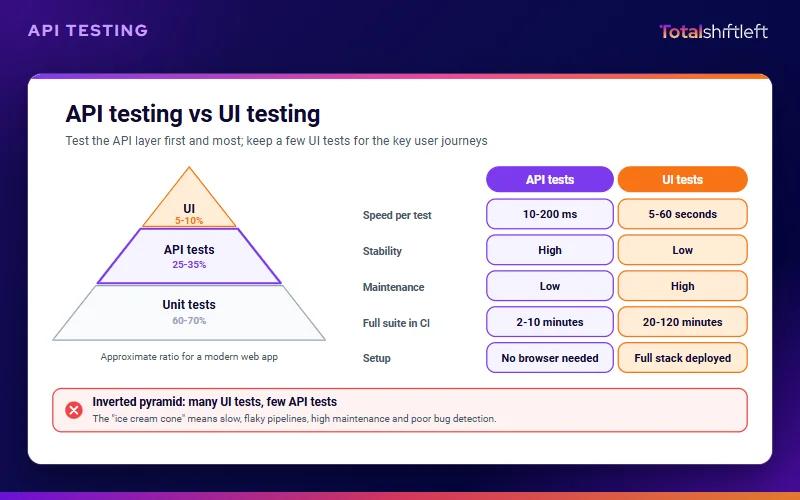
API testing vs UI testing is not an either-or choice — but the order matters enormously. Testing your API layer first (the shift-left principle) catches the majority of application bugs faster, cheaper, and with far less test maintenance than UI-first strategies. This guide explains why API testing should lead your quality strategy.